Capability 01
Appointments, patients, and doctors

CareBridge Medical Group
CareBridge Medical Group’s clinical care was strong, but appointments, beds, billing, and pharmacy updates lagged each other. We unified the hospital day around one HMS.
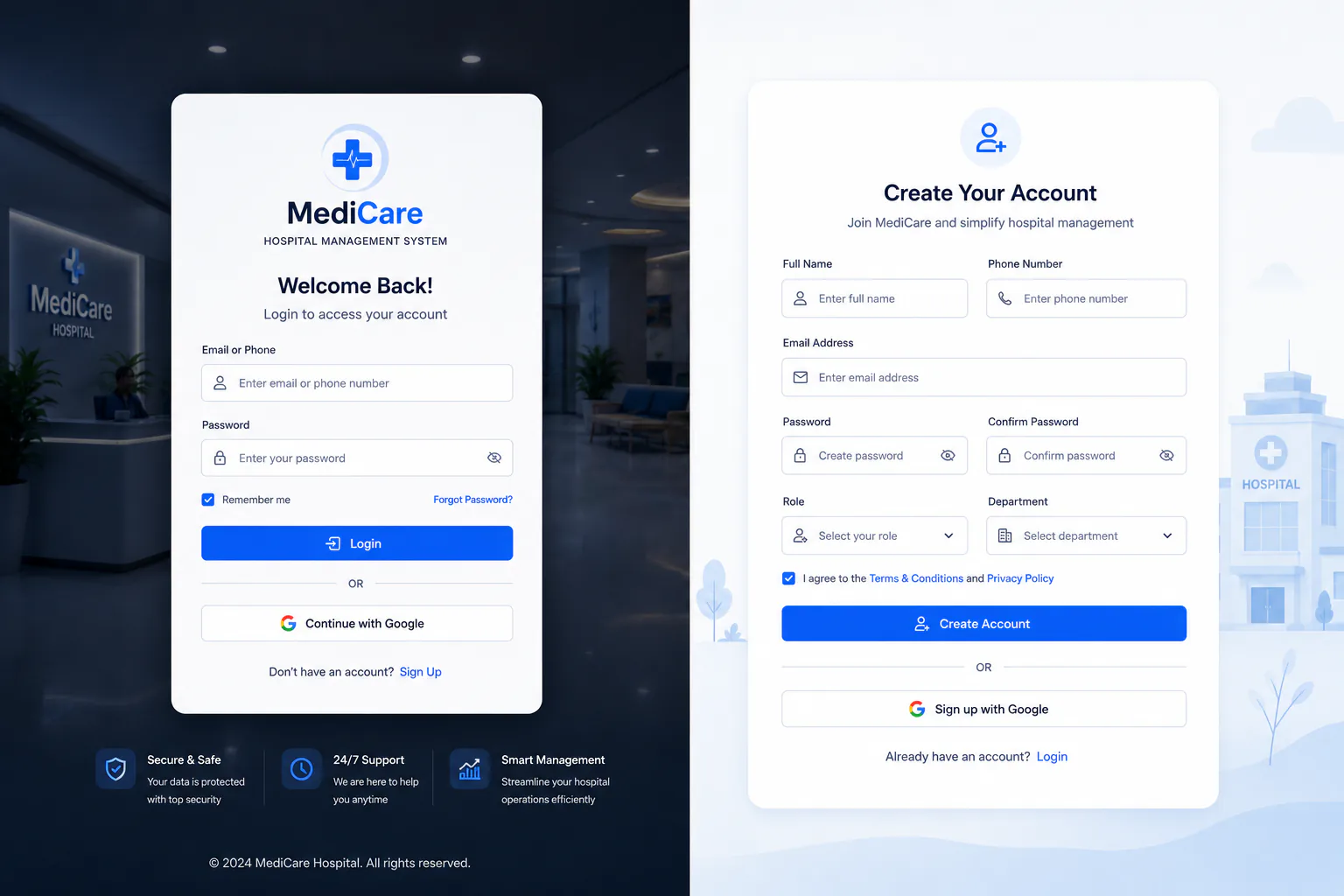
Secure sign in
Login and registration flows with role and department selection for secure hospital access.
Engagement
Patients felt delays that were really handoff problems between desks and departments.
We aligned appointment, patient, and bed records first so clinical teams stopped reconciling identity mid visit.
Billing and pharmacy were connected next so charges and medicines followed the same encounter story.
A dedicated doctor portal reduced workarounds that previously lived in chat apps and paper notes.
Challenge
CareBridge Medical Group’s clinical care was strong, but appointments, beds, billing, and pharmacy updates lagged each other. Patients felt delays that were really handoff problems between desks and departments.
Front desk, wards, pharmacy, and billing each held partial truth. Doctors wasted time reconstructing context from chat apps and paper notes. Patients waited while staff hunted records that should have been one timeline.
Prior hospital tools failed when “patient” meant different IDs per desk, or when doctor portals were as heavy as admin consoles and got abandoned. Billing leakage and pharmacy mismatches followed from parallel encounter stories.
What was at stake was throughput, bed visibility without phone chains, end of day billing gaps, and clinician time spent on reconstruction instead of care. Leadership could not trust occupancy and throughput reports.
CareBridge needed an encounter centric HMS so appointments, admissions, billing, pharmacy, and the doctor portal consumed one shared patient day instead of inventing parallel ones.
Approach
Encounter centric design: appointments and admissions create a shared timeline; billing, pharmacy, and the doctor portal consume that timeline instead of inventing parallel ones.
Capabilities
Capability 01
Appointments, patients, and doctors
Capability 02
Departments and bed management
Capability 03
Billing, payments, and pharmacy
Capability 04
Hospital reports and dashboards
Capability 05
Dedicated doctor portal
Capability 06
Users, roles, and system settings
Stack
Results
Outcome 01
Front desk and clinical teams share one patient timeline
Outcome 02
Bed availability is visible without phone chains between wards
Outcome 03
Billing follows encounters more closely, shrinking end of day gaps
Outcome 04
Pharmacy fulfills against the same patient context clinicians see
Outcome 05
Doctors spend less time reconstructing history from side channels
Outcome 06
Leadership reports occupancy and throughput from trusted operational data
Insights
Screenshots
Interface snapshots from the live build. For full module documentation, see the Hospital Management System project page.
Login and registration flows with role and department selection for secure hospital access.
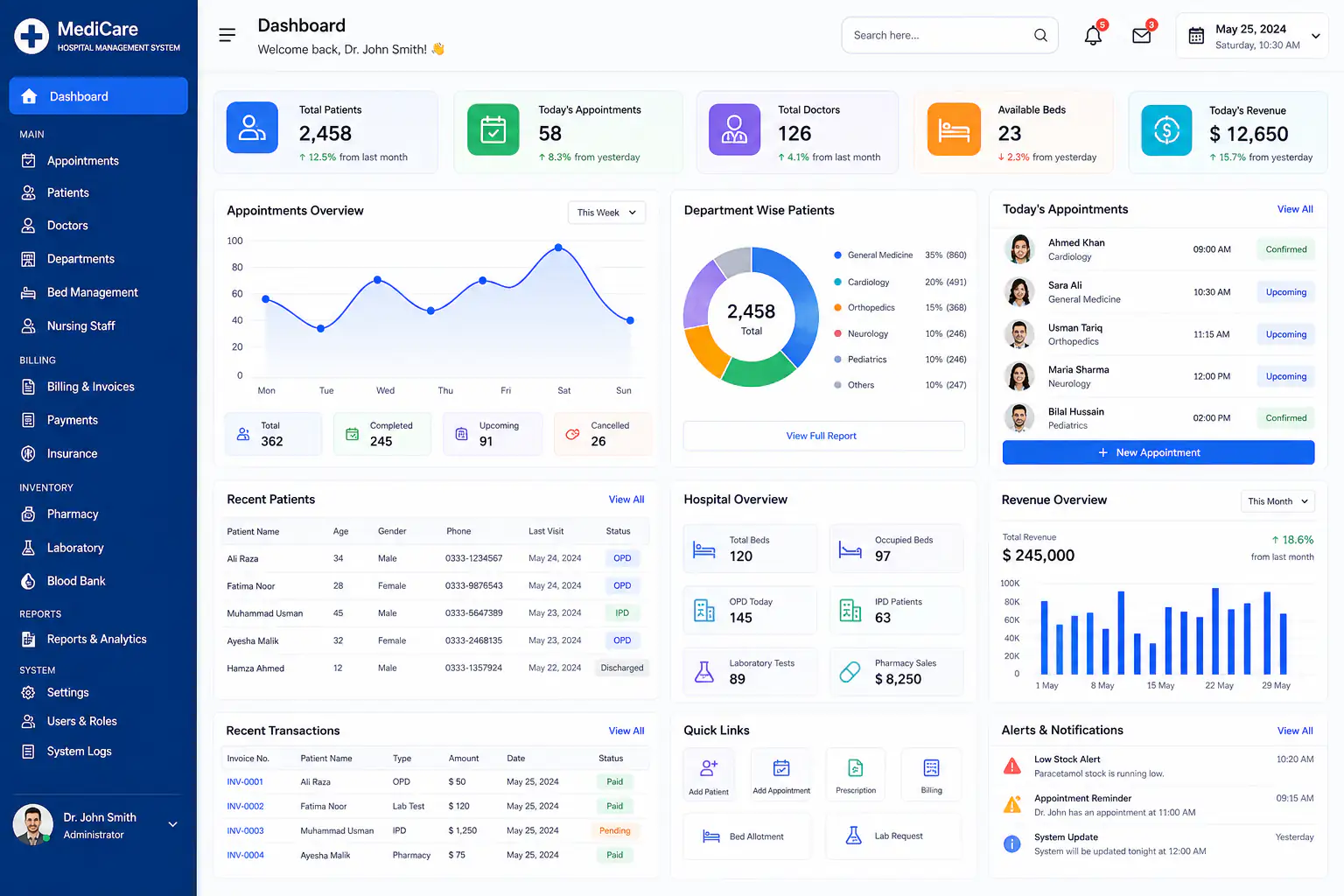
A complete hospital platform covering appointments, patients, doctors, beds, billing, pharmacy, reports, and staff operations.
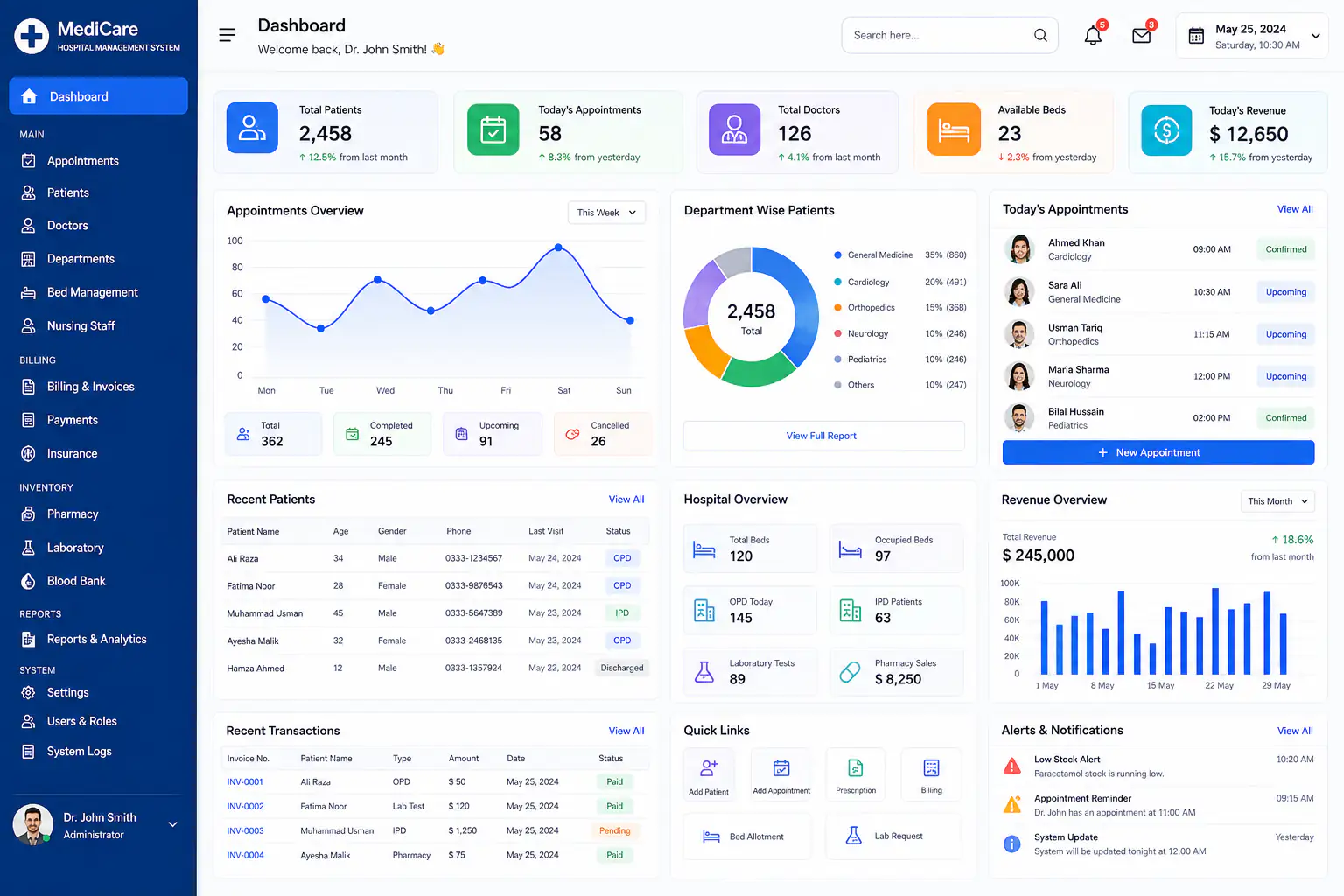
Live patients, appointments, doctors, bed availability, revenue, department mix, and hospital alerts in one overview.
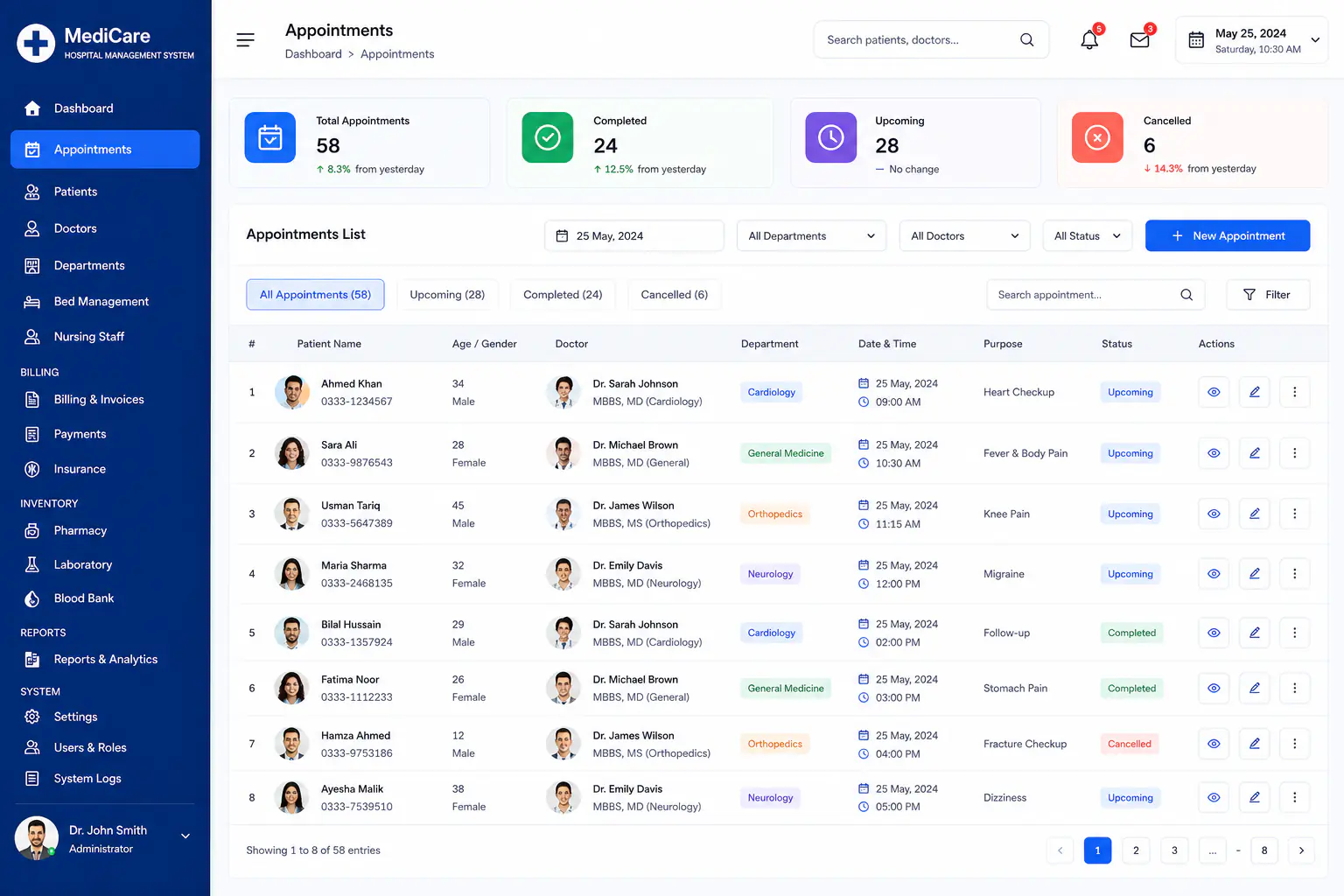
Schedule and track upcoming, completed, and cancelled appointments by doctor, department, and visit purpose.
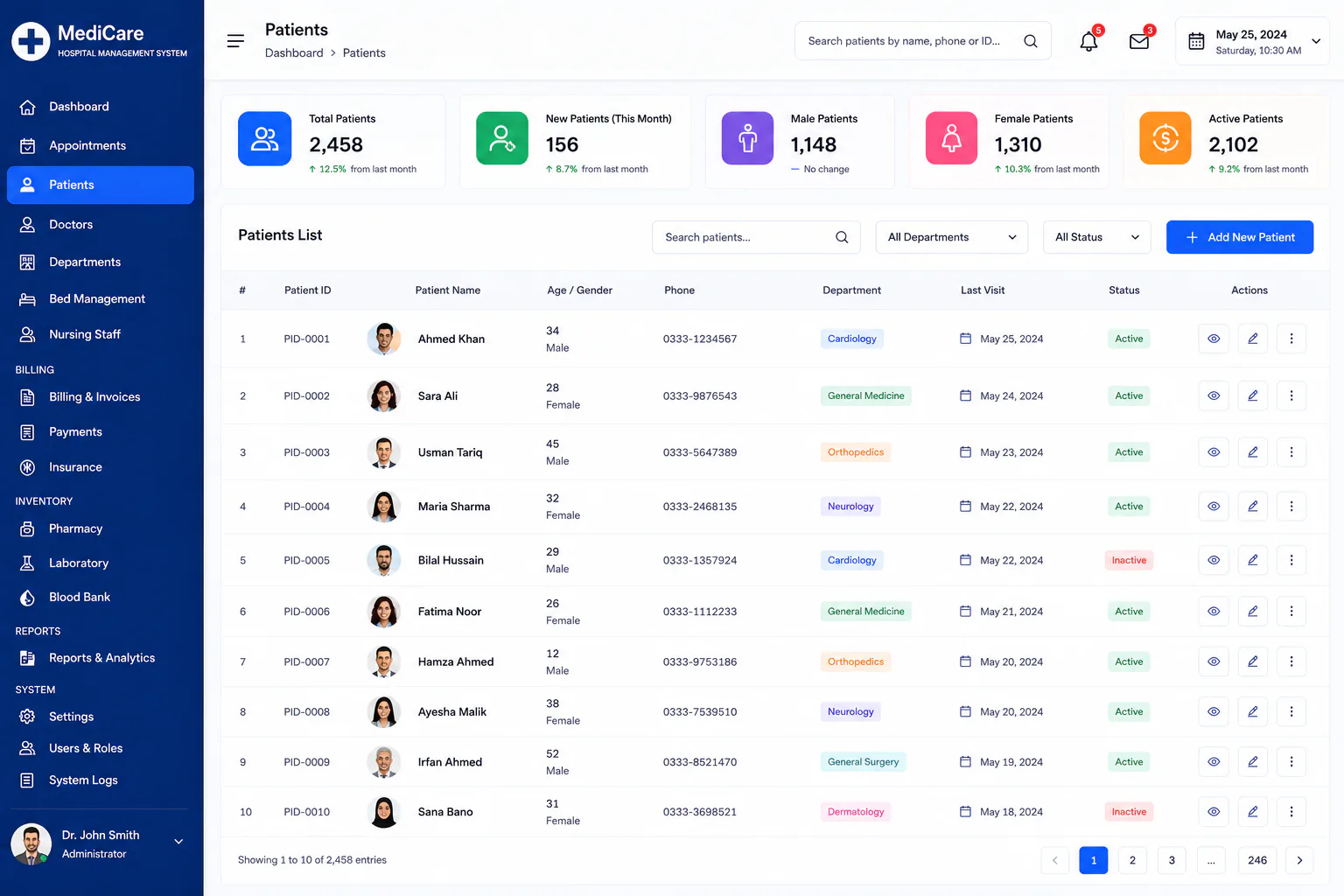
Maintain patient profiles, demographics, departments, last visits, and active status across the hospital.
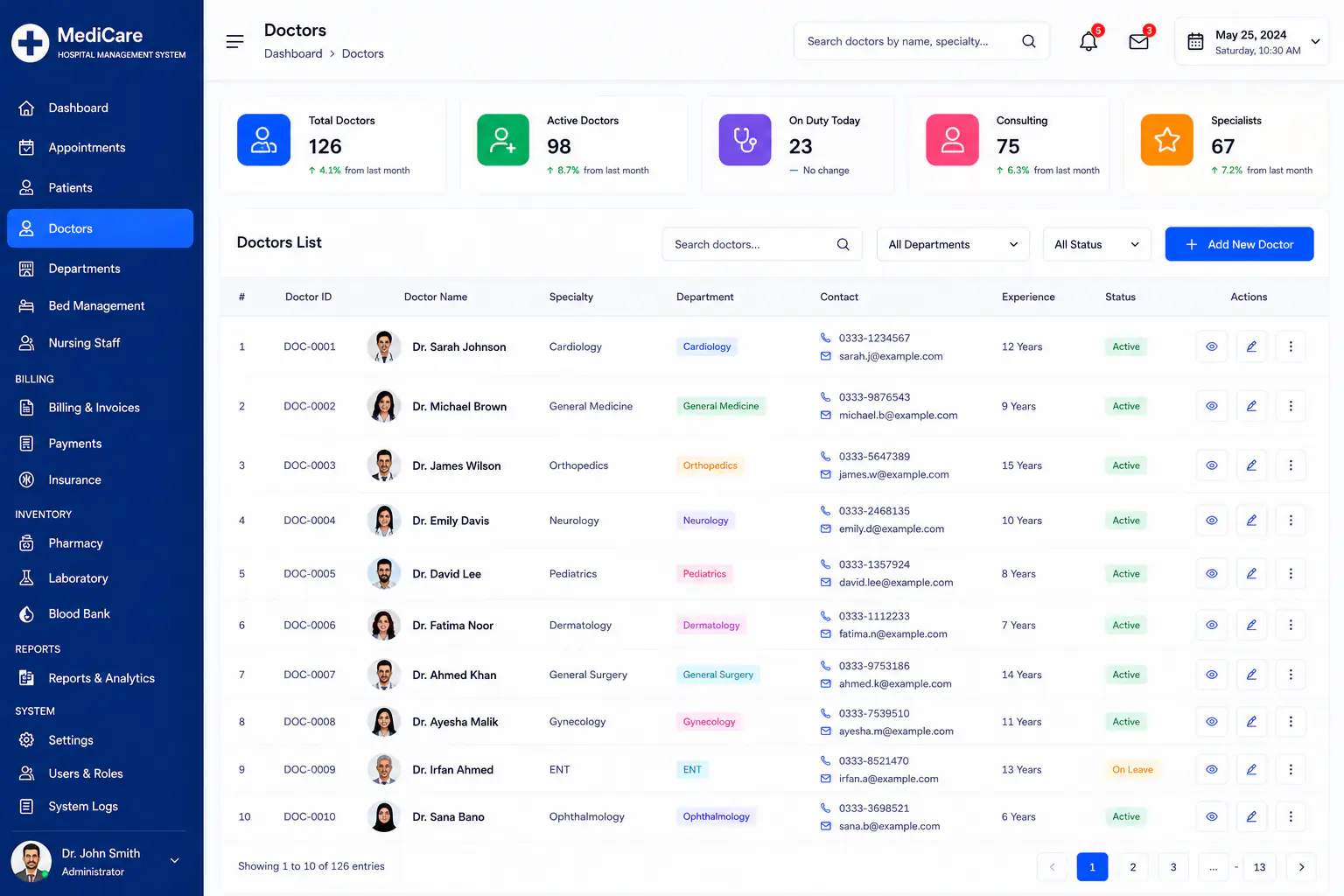
Manage doctor records, specialties, departments, contact details, experience, and on duty status.
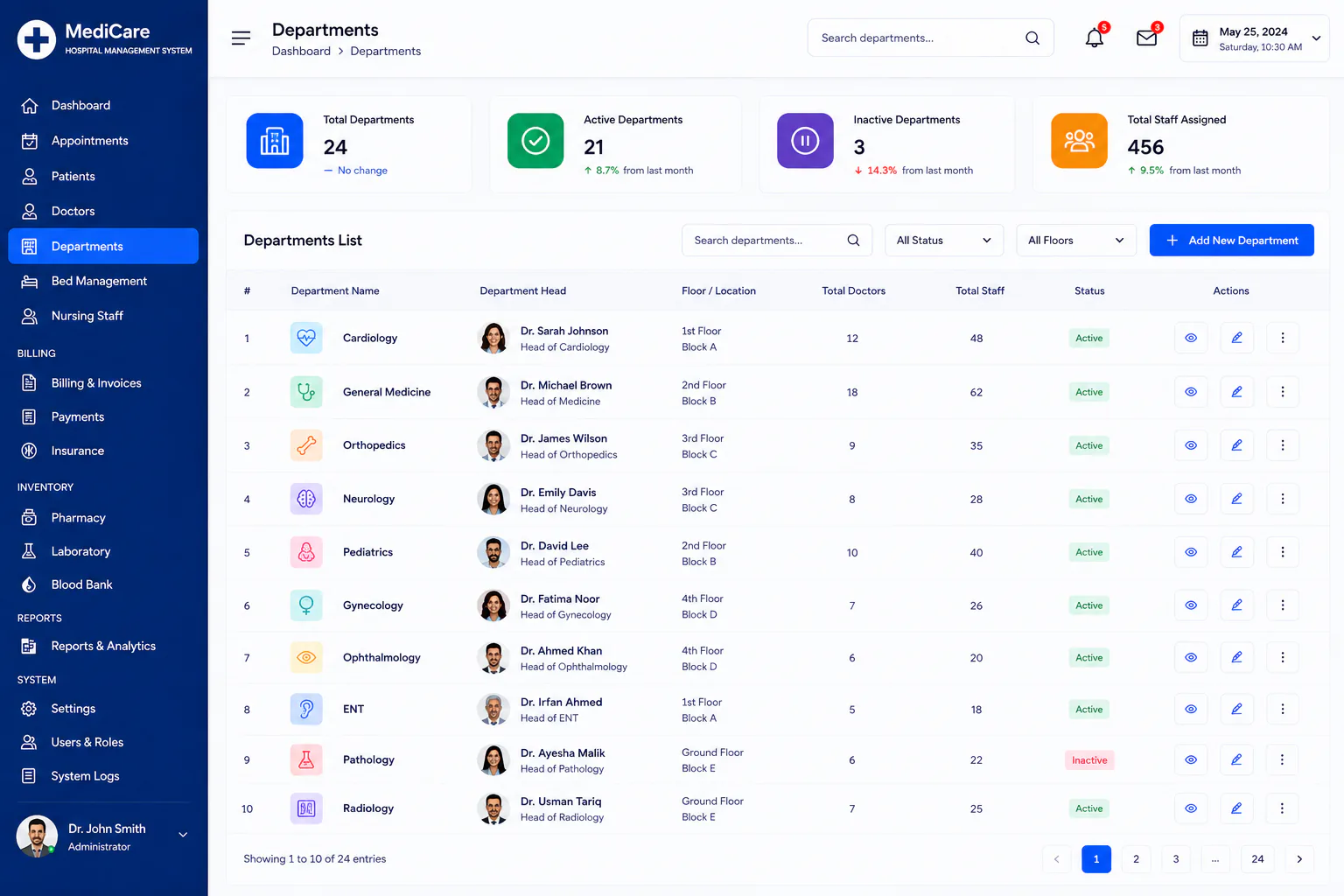
Organize hospital departments with heads, floors, assigned doctors, staff counts, and active status.
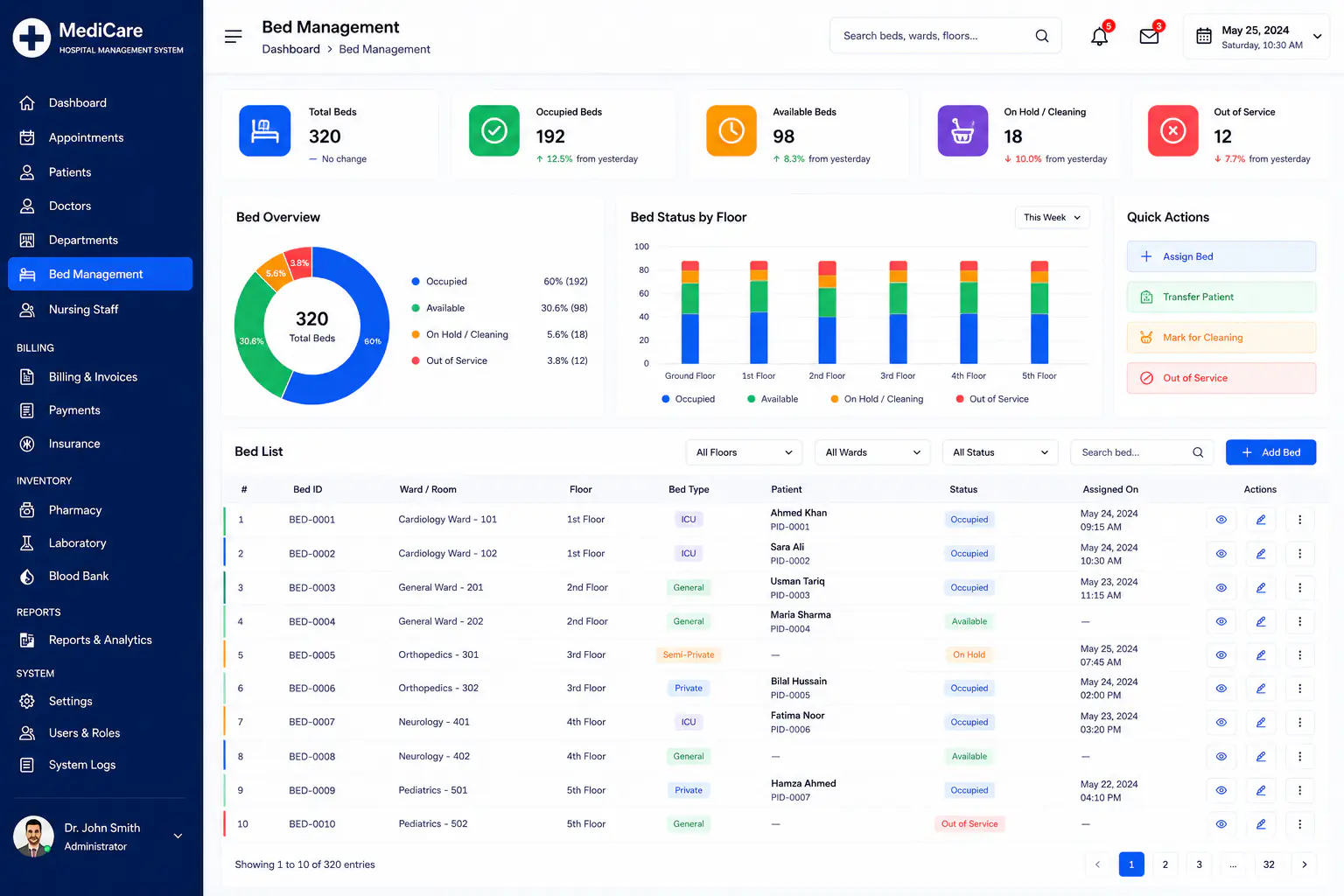
Track occupied, available, cleaning, and out of service beds by ward, floor, and bed type.
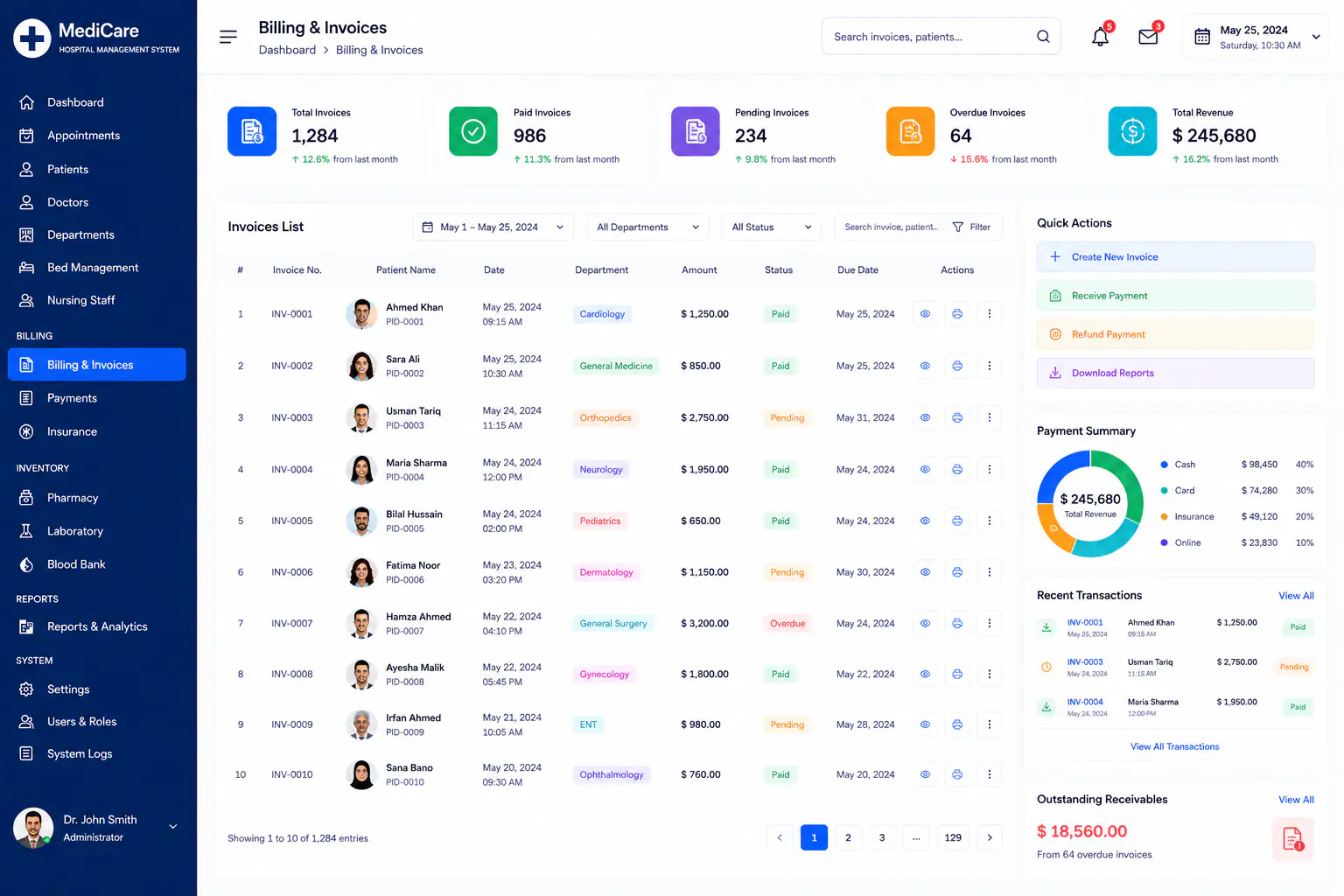
Create and manage invoices with paid, pending, and overdue status plus payment method summaries.
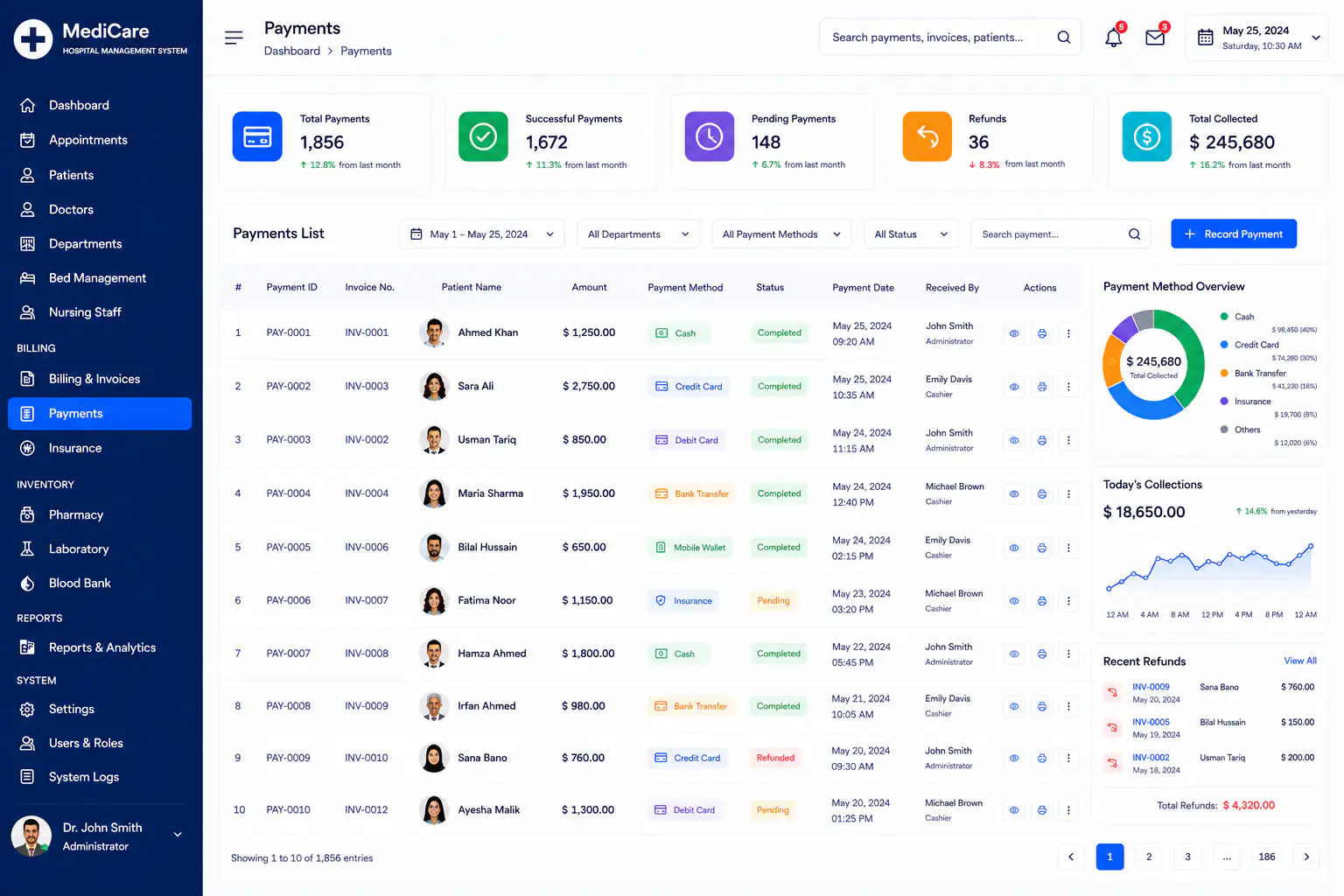
Record collections across cash, card, transfer, wallet, and insurance with refunds and daily totals.
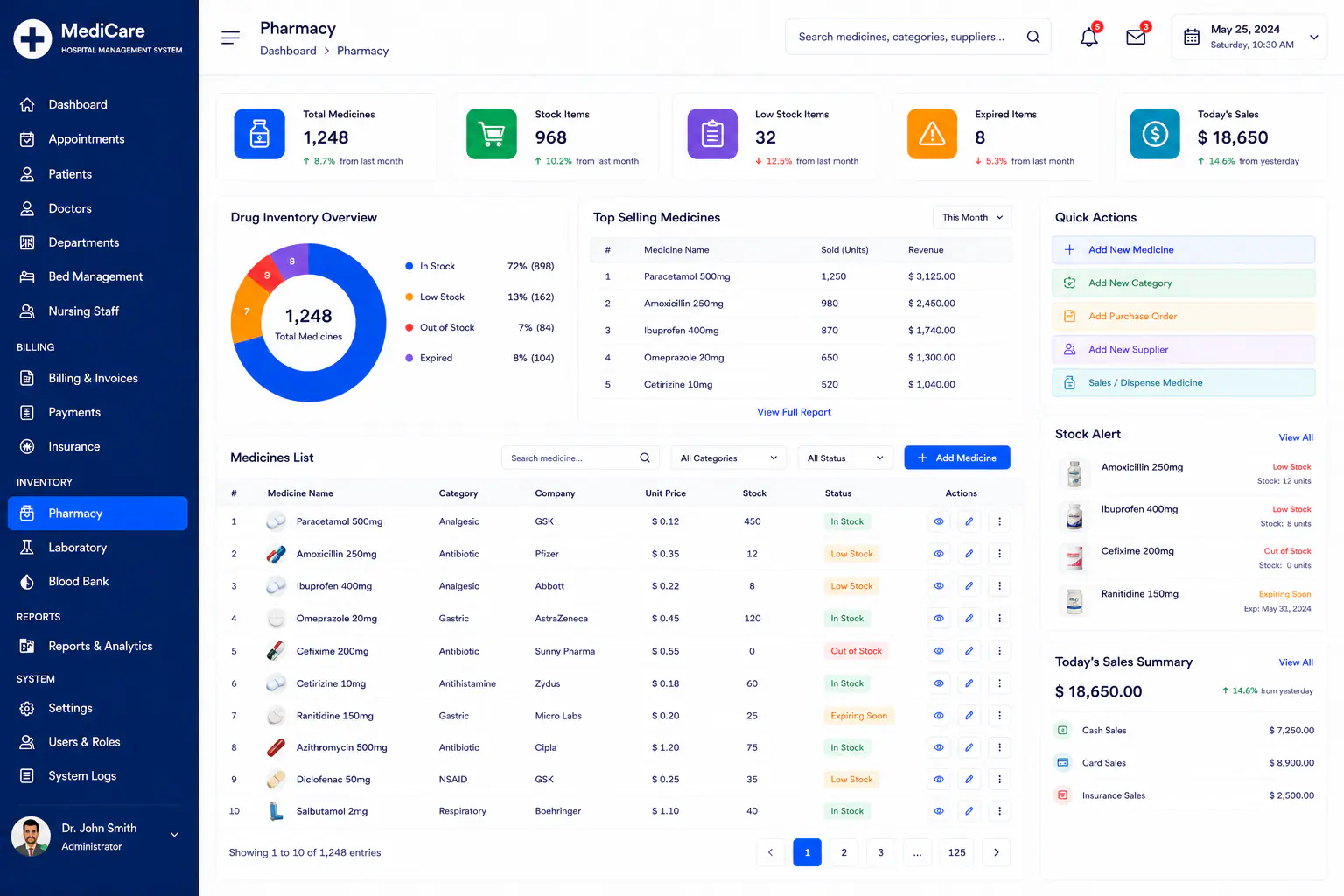
Monitor medicine inventory, low stock and expiry alerts, top selling drugs, and pharmacy sales.
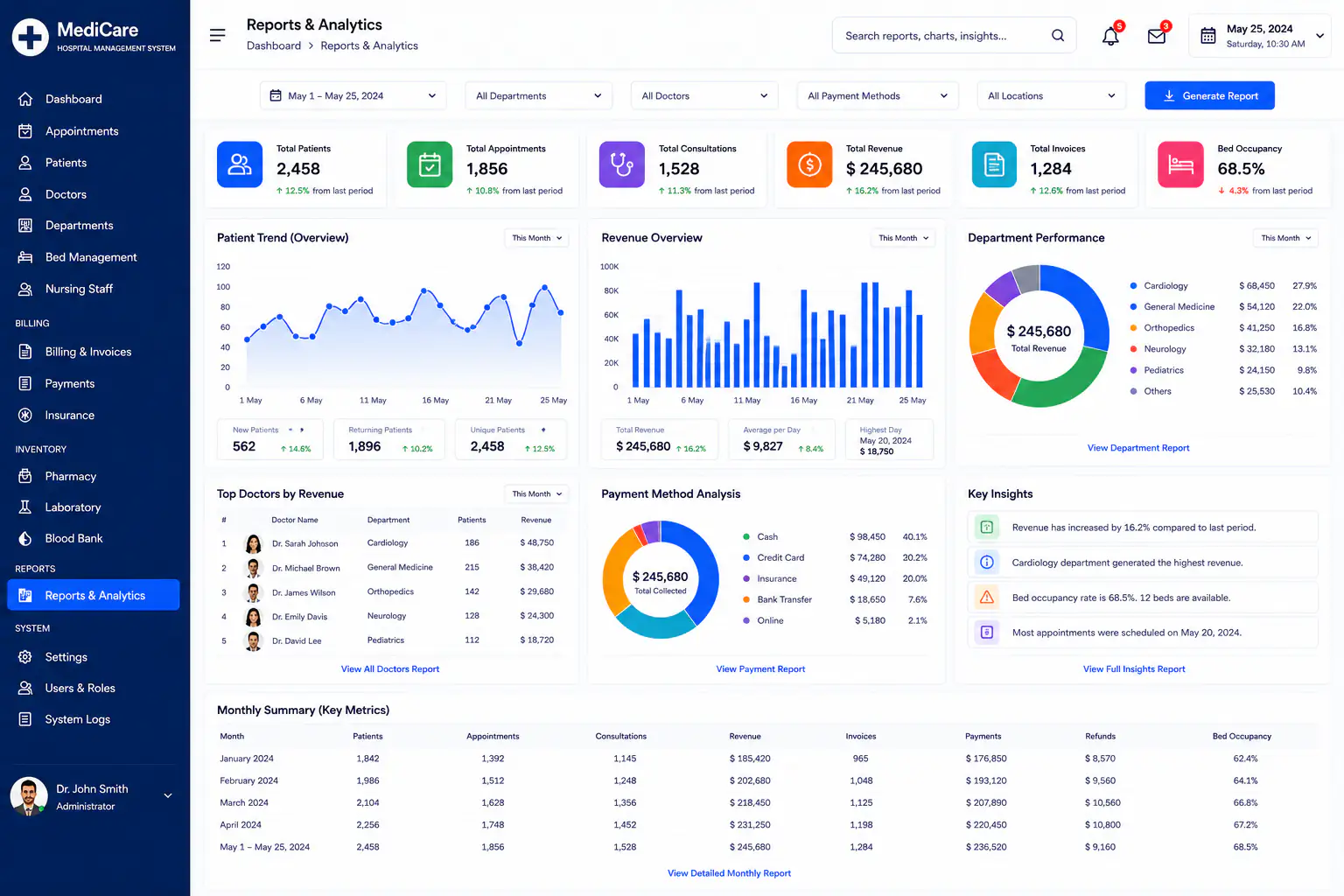
Review patients, appointments, revenue, occupancy, department performance, and monthly hospital KPIs.
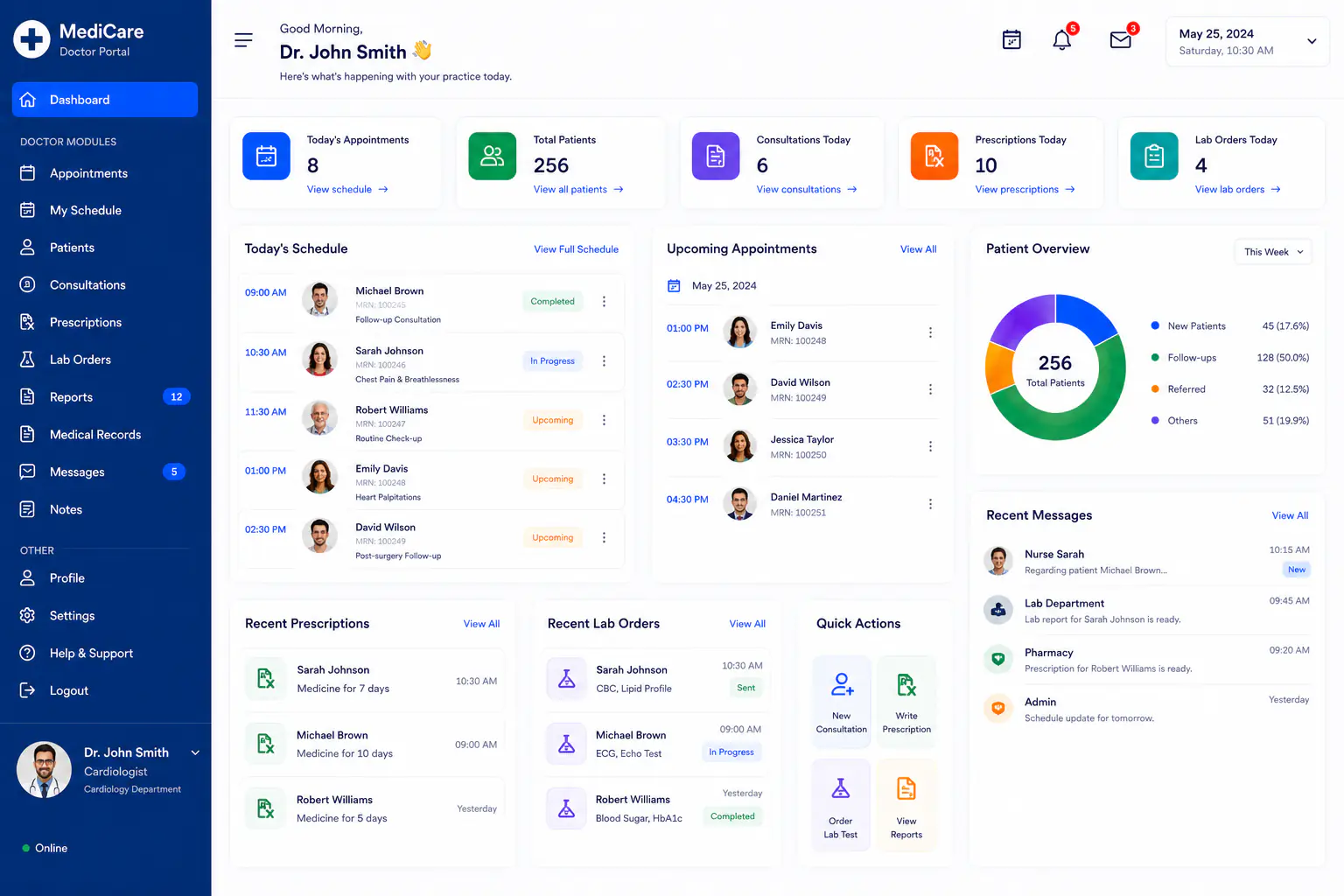
Doctor workspace for schedules, consultations, prescriptions, lab orders, patients, and messages.
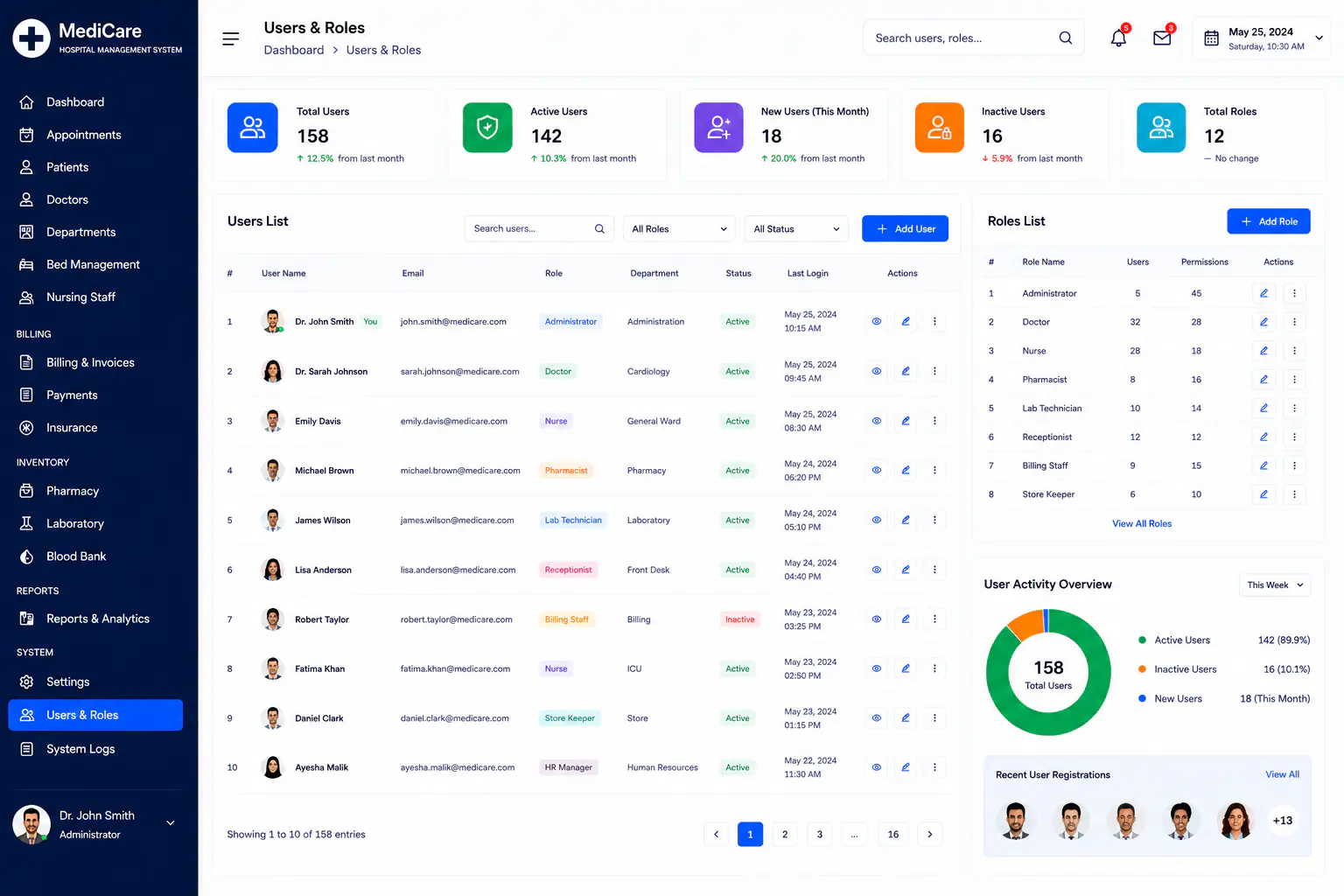
Control hospital users, roles, permissions, departments, and active access across clinical and admin teams.
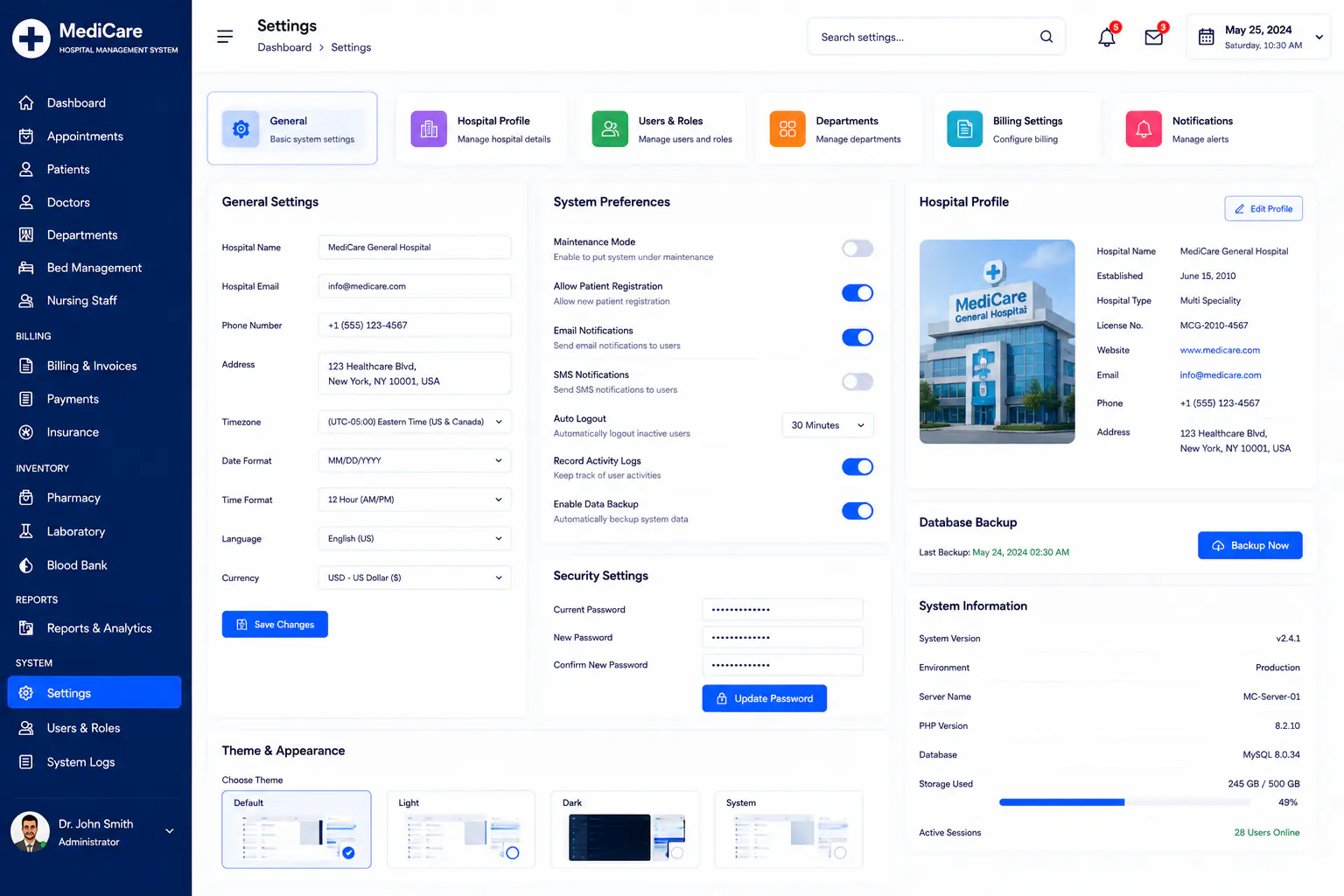
Configure hospital profile, preferences, security, backups, system information, and theme options.
Testimonial
We stopped running a hospital of parallel charts. Appointments, beds, billing, and the doctor portal finally describe the same patient day.
Case study FAQs
Questions about this engagement: how we scoped, sequenced, and measured outcomes for CareBridge Medical Group.
Department champions, short floor training, and phased module activation kept CareBridge care moving during rollout.
This engagement focused on hospital operations: appointments, beds, billing, pharmacy, and doctor workflows, scoped to CareBridge priorities.
Yes. Role based access keeps sensitive clinical and financial actions appropriately bounded across CareBridge teams.
See the Hospital Management System project page for module lists and product FAQs. This case study covers the CareBridge engagement.
Front desk, ward leads, pharmacy, billing, and physicians mapped identity and encounter flows before specialty modules expanded.
Sixteen weeks: patient identity and appointments first, then beds, then billing and pharmacy, with the doctor portal focused on daily clinical tasks.
Not as a primary scope. We stabilized the operational backbone first; specialty system links can follow once encounter identity is trusted.
Short floor sessions with department champions. The doctor portal stayed thinner than admin consoles so daily clinical tasks remained usable.
Yes. The same encounter spine works at smaller scale; bed and multi ward complexity can be lighter until you need it.
CareBridge tracked record hunt time, bed phone chain frequency, end of day billing gaps, and doctor use of side channels versus the portal.
Patient identity and active appointments were stabilized before go live. Billing and pharmacy history followed encounter definitions clinical and finance leads signed off.
Post launch we refined role permissions, bed status rules, and doctor portal task lists from department champion feedback.
More work
Tell Next Software Development Company about your goals. We will reply within one business day.
Get a Free Quote