Capability 01
Medicine catalog and stock control

MediStock Pharmacy Chain
MediStock Pharmacy Chain did not have a generic inventory problem, they had a medicine problem: batches, expiry, and purchasing lag. We built stock control around those constraints.
System overview
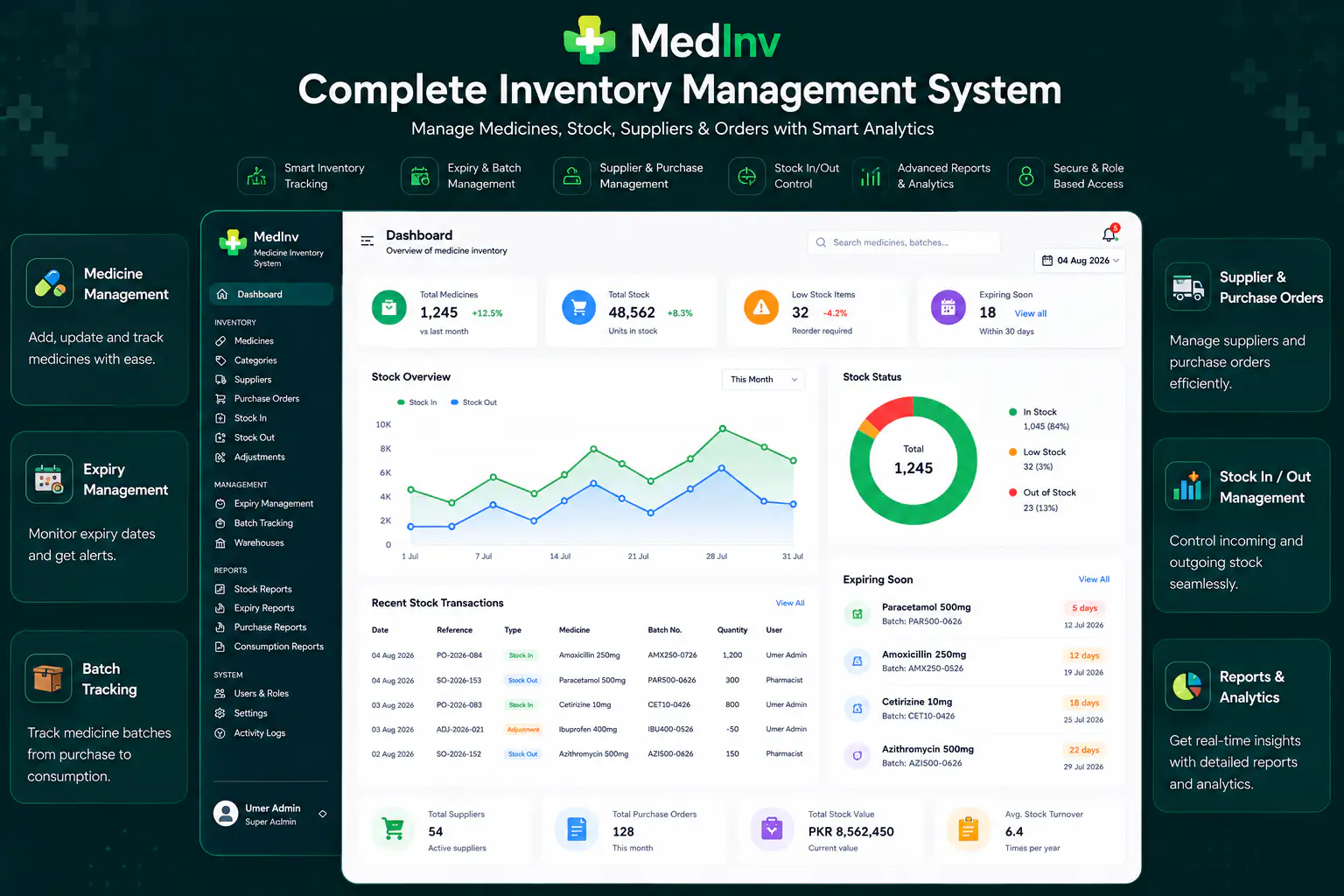
A pharmacy inventory platform for medicines, suppliers, purchases, stock movement, batches, and expiry control.
Engagement
Shelves looked full while near expiry units silently became write offs.
We modeled stock movements with batch identity and expiry as mandatory, not optional fields.
Purchasing tied to real on hand and inbound so orders stopped being guesswork between branches.
MediStock now sees what will expire, what to transfer, and what to buy, before waste happens.
Challenge
MediStock Pharmacy Chain did not have a generic inventory problem. They had a medicine problem: batches, expiry, and purchasing lag. Shelves looked full while near expiry units silently became write offs.
Quantity only stock counts hid which batches were aging out. Purchase orders lagged sales reality between branches, and valuation reports required painful manual cleanup. Pharmacists lacked actionable expiry alerts in daily ops.
Prior inventory tools failed because they treated SKUs like retail widgets. Batch and expiry were optional fields, transfers lost identity, and alerts were monthly spreadsheet exercises staff ignored. Purchasing guessed instead of reading on hand and inbound truth.
What was at stake was write off cost, branch transfer effectiveness, regulatory friendly audit trails, and inventory valuation leadership could trust. Without batch aware movements, growth would multiply waste and cleanup work.
MediStock needed inventory events that always carry batch and expiry, with purchasing, stock in/out, and reports enforcing pharmacy rules in the system.
Approach
Inventory events always carry batch and expiry. Purchasing, stock in/out, and reports read that model so pharmacy rules are enforced by the system.
Capabilities
Capability 01
Medicine catalog and stock control
Capability 02
Supplier and purchase order management
Capability 03
Stock in, stock out, and adjustments
Capability 04
Batch and expiry tracking
Capability 05
Low stock and valuation reports
Capability 06
Pharmacy inventory dashboard
Stack
Results
Outcome 01
Near expiry risk is visible early enough to transfer or discount
Outcome 02
Purchase orders reflect real consumption and inbound stock
Outcome 03
Stock in and stock out leave a cleaner audit for each batch
Outcome 04
Valuation reports need less manual correction
Outcome 05
Branches share a consistent medicine catalog and movement language
Outcome 06
Write off conversations become data led instead of anecdotal
Insights
Screenshots
Interface snapshots from the live build. For full module documentation, see the Medicine Inventory System project page.
A pharmacy inventory platform for medicines, suppliers, purchases, stock movement, batches, and expiry control.
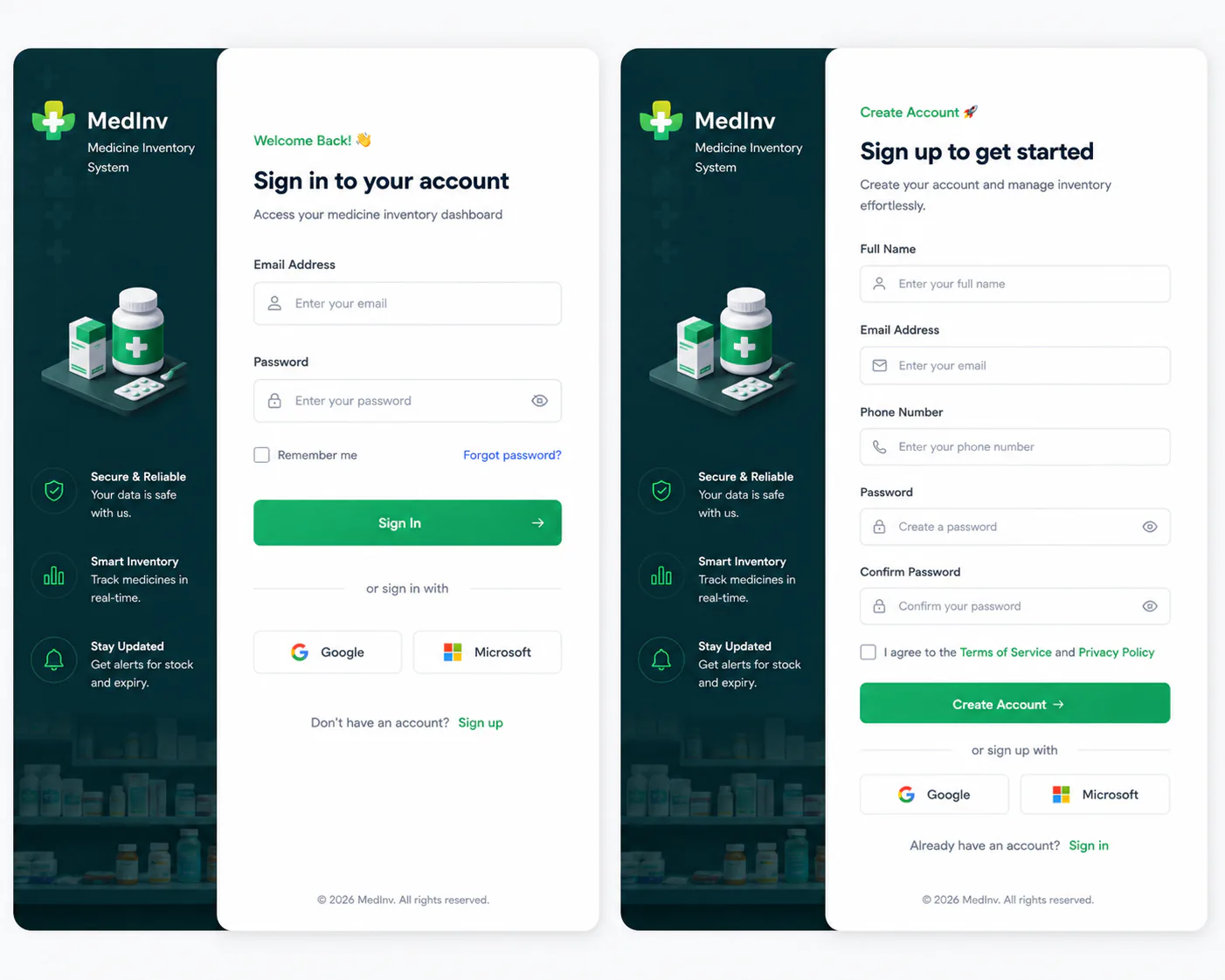
Secure login for pharmacy and inventory staff managing medicine stock and purchases.
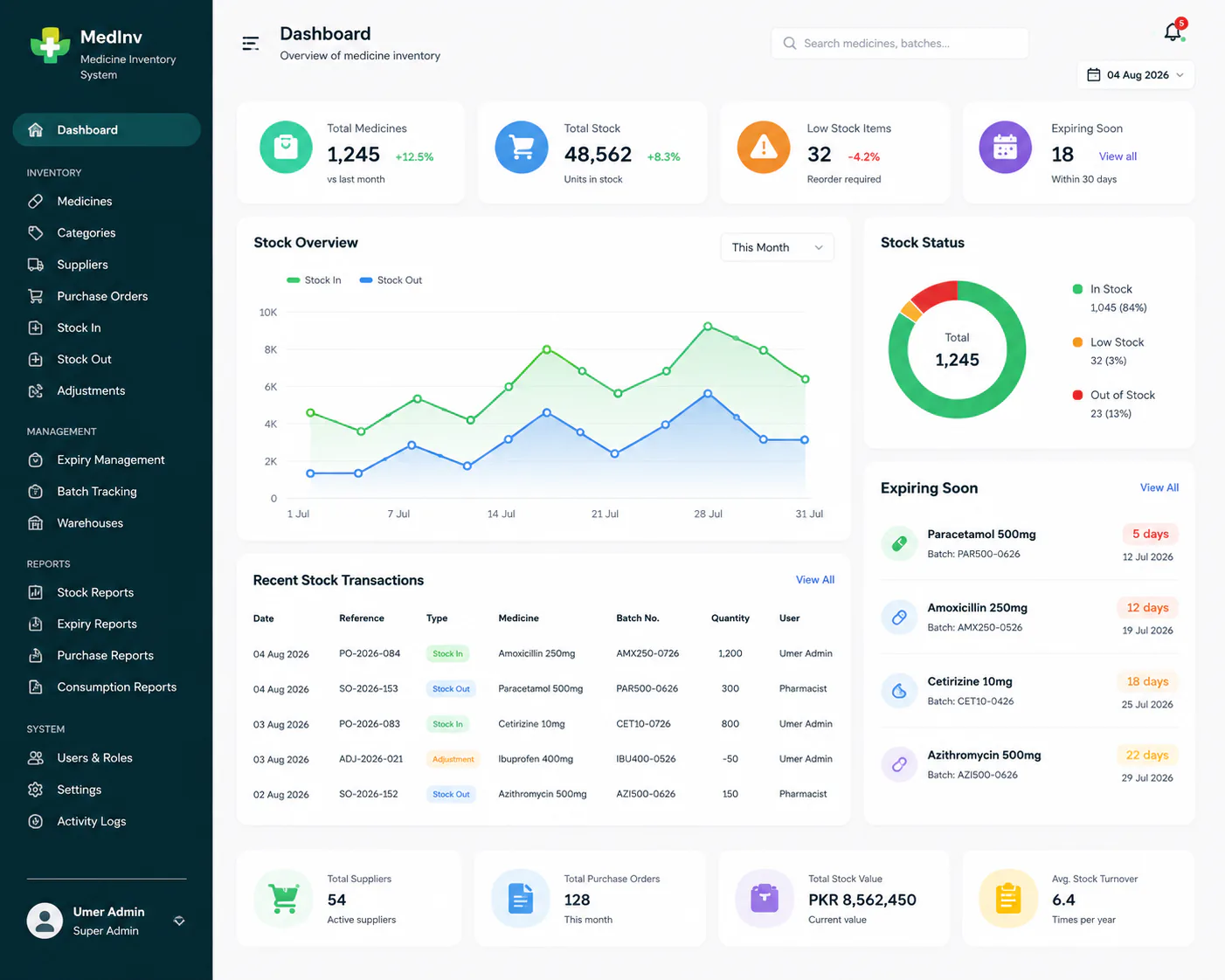
Live stock levels, low stock alerts, expiry warnings, purchases, and inventory KPIs in one view.
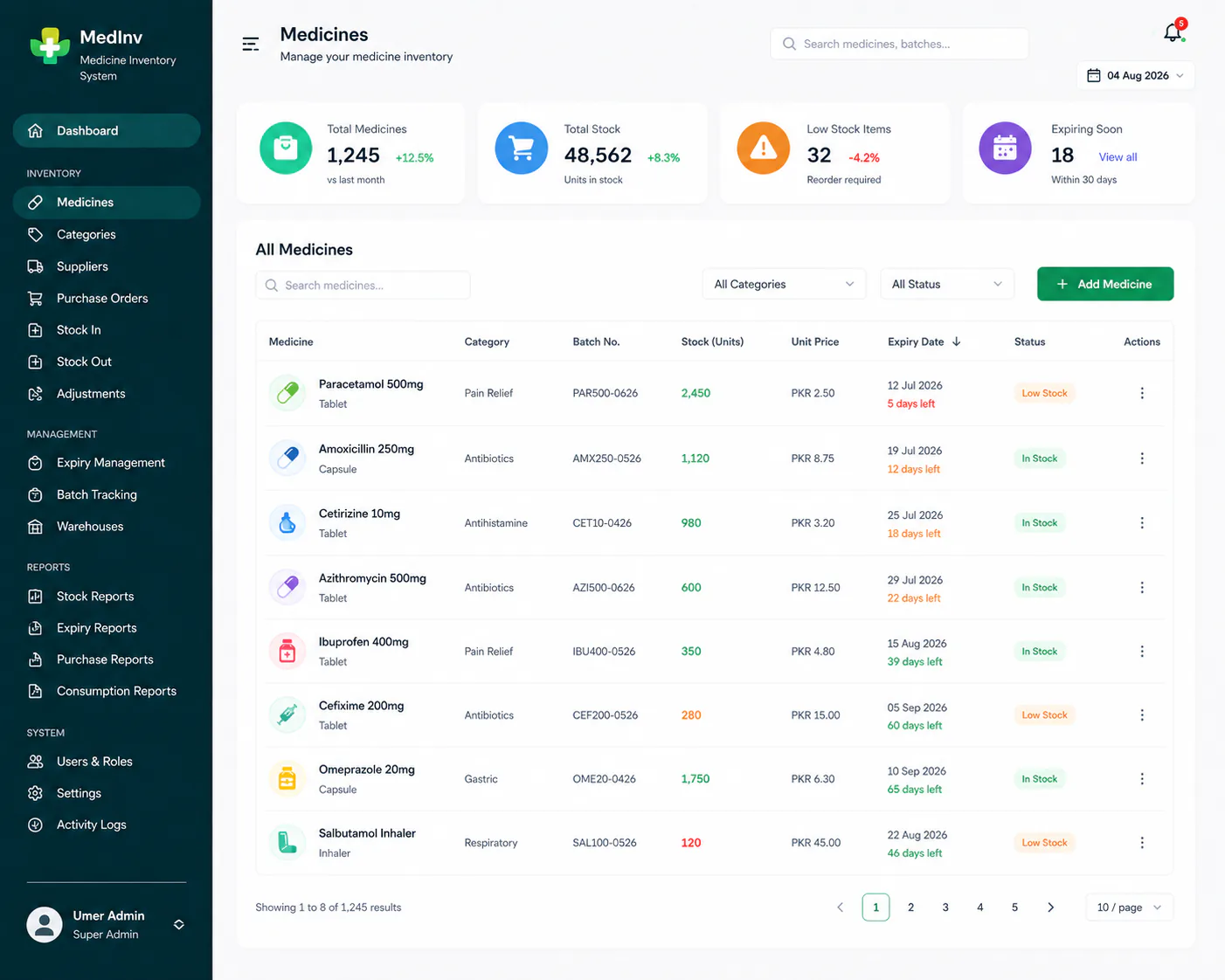
Maintain medicine catalogs with SKUs, strengths, pack sizes, categories, and stock status.
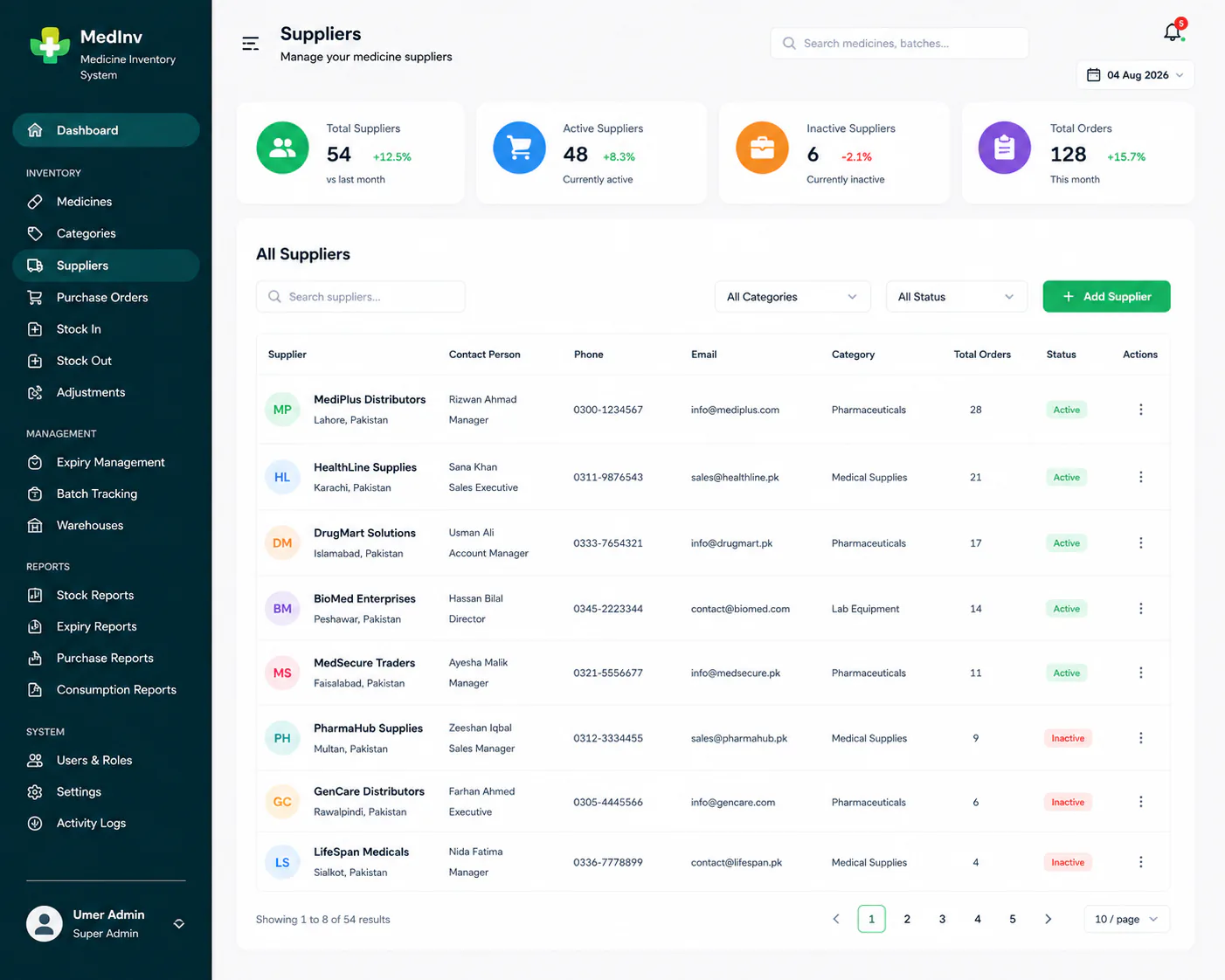
Manage supplier contacts, lead times, and purchase relationships for pharmacy replenishment.
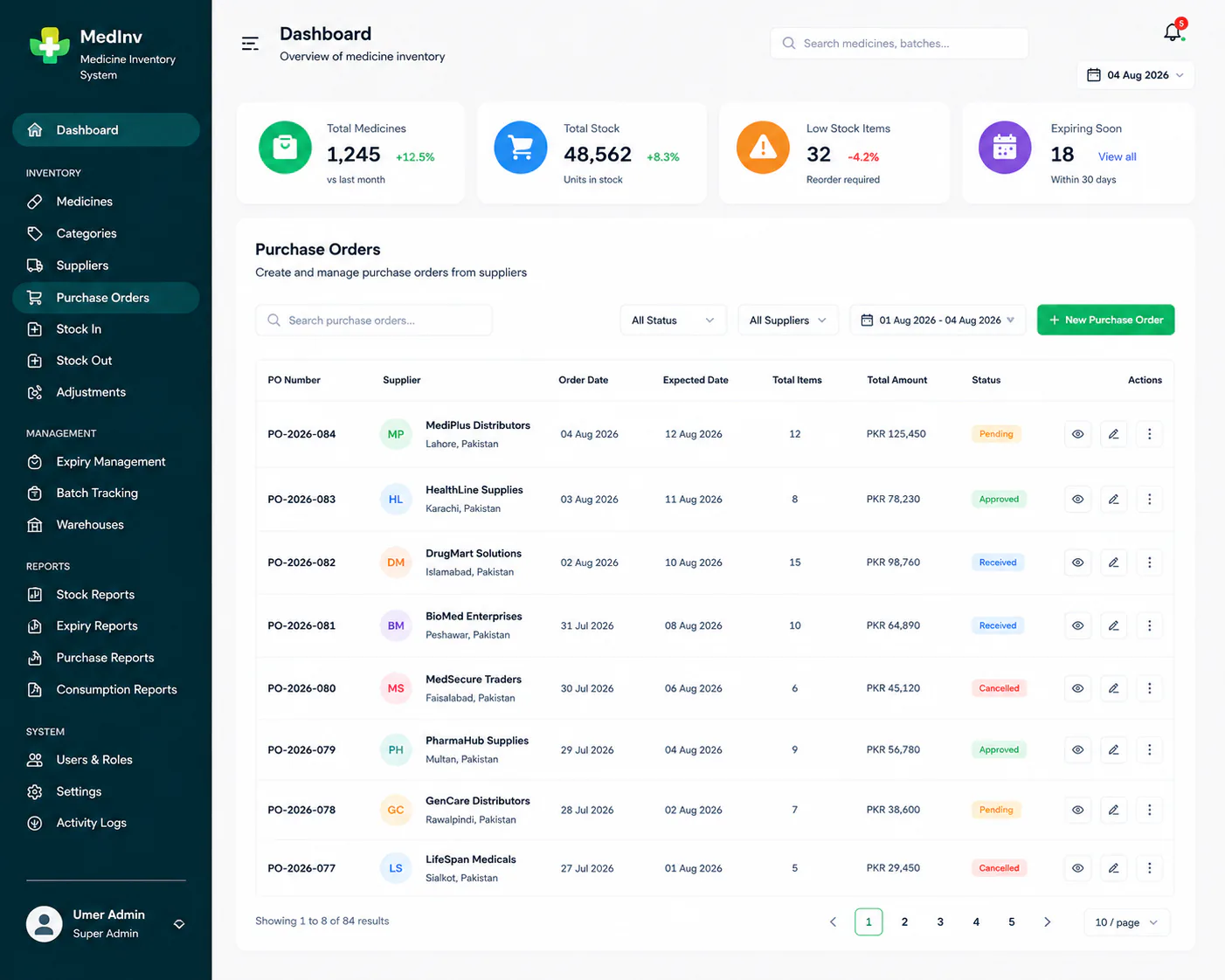
Create and track purchase orders from request through receiving against supplier catalogs.
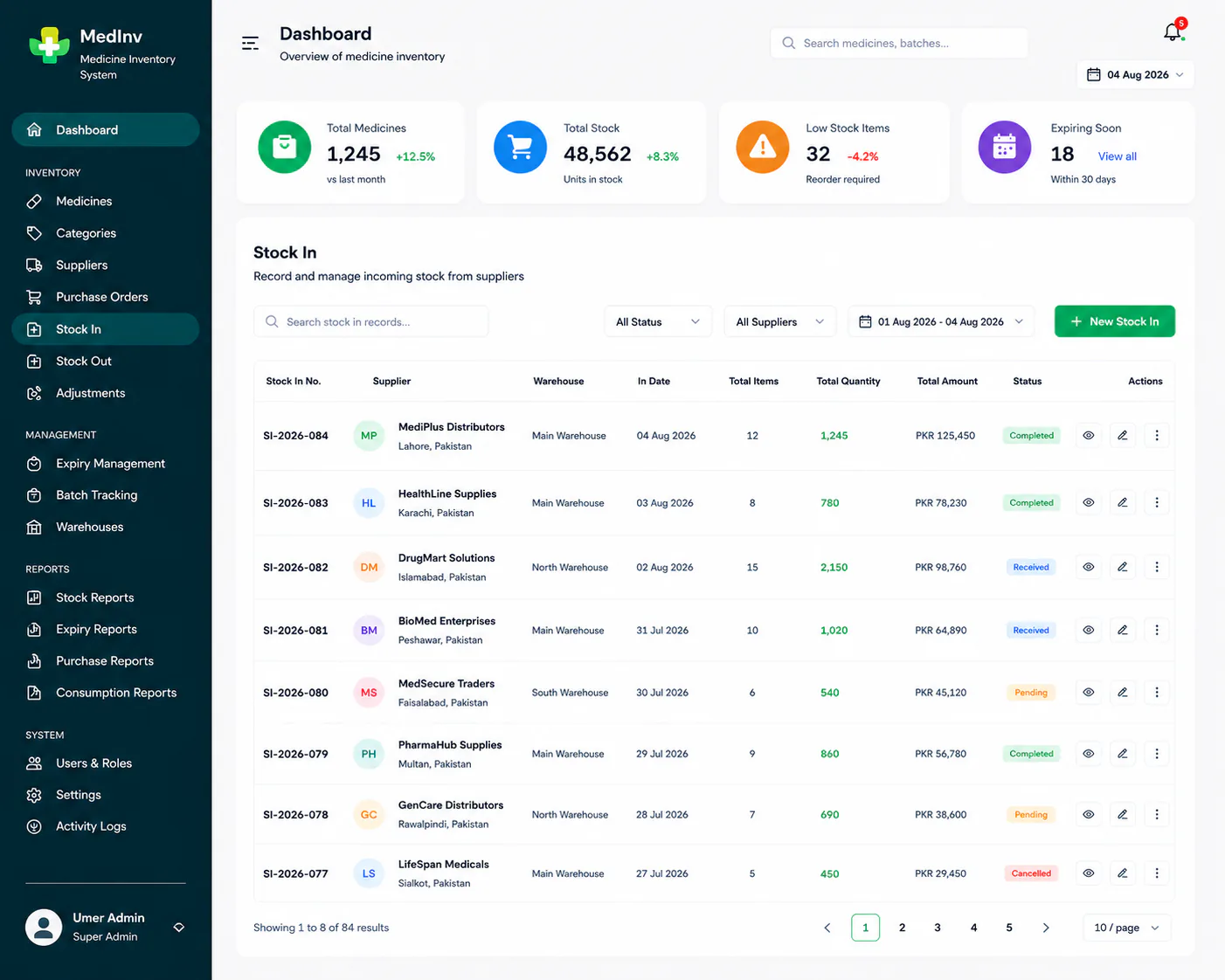
Receive medicines into inventory with quantities, batches, and receiving references.
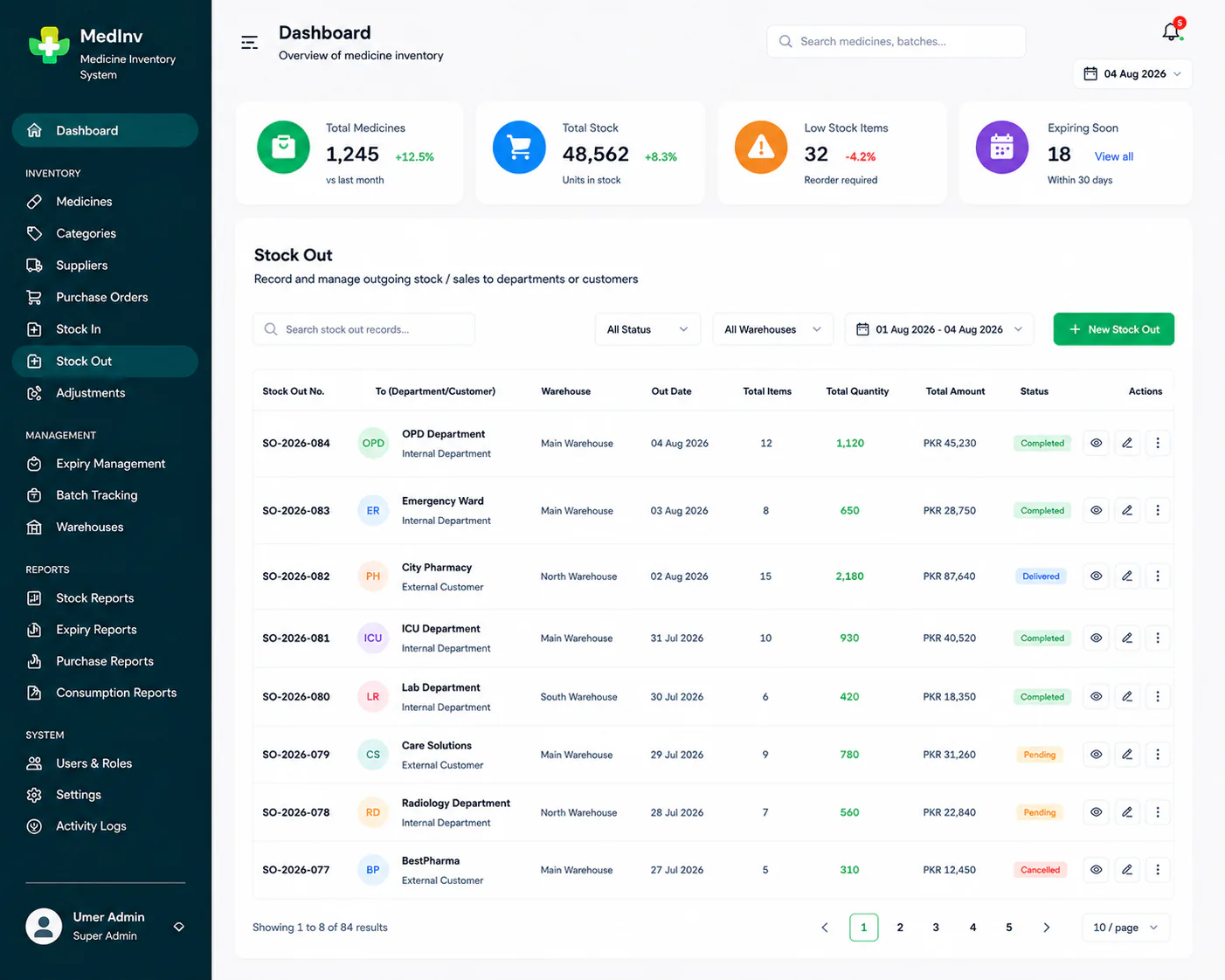
Issue stock for sales, transfers, or consumption with clear outbound movement records.
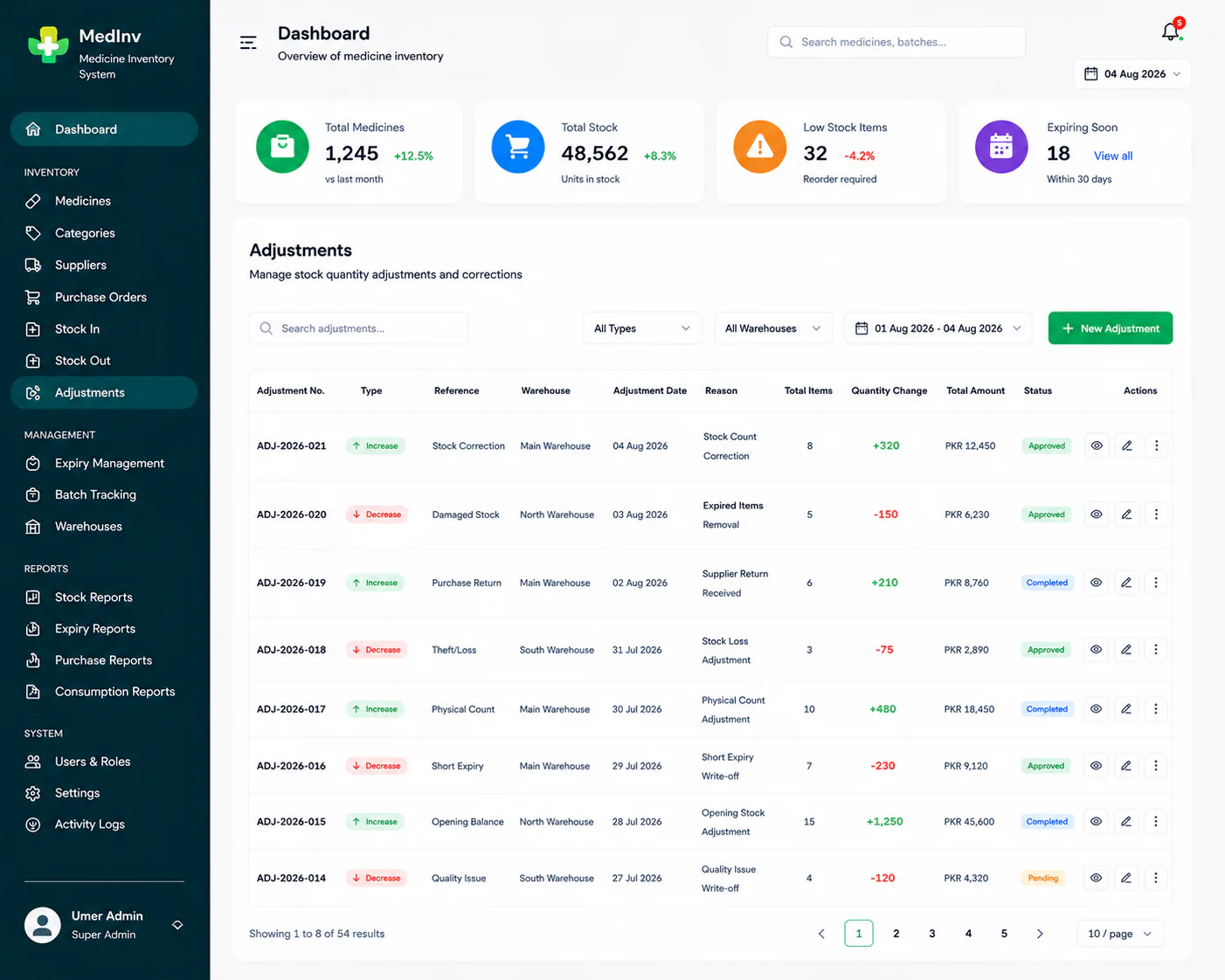
Correct inventory with controlled adjustments for damage, recount, or variance fixes.
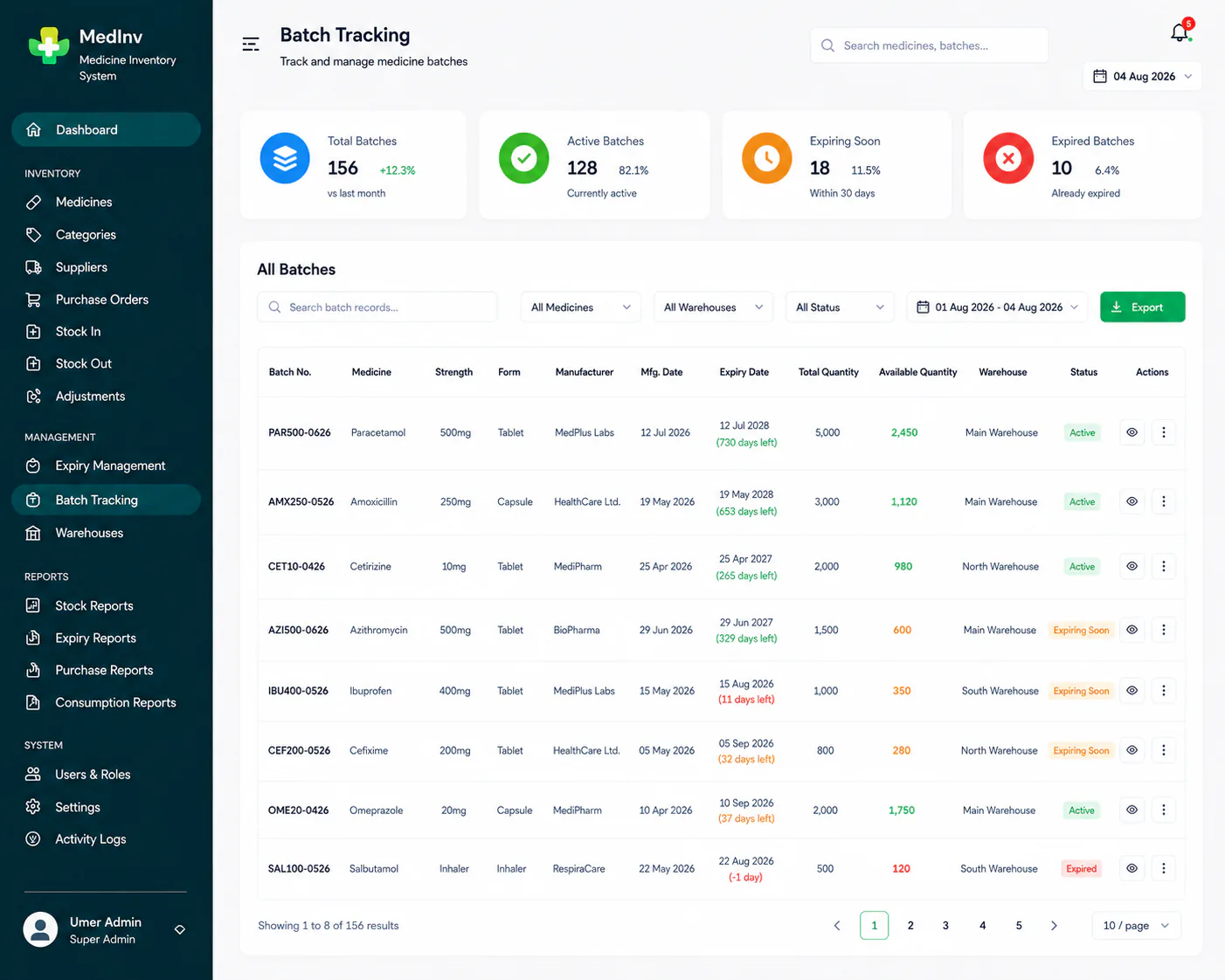
Track medicine batches by lot number, quantity, and location for full traceability.
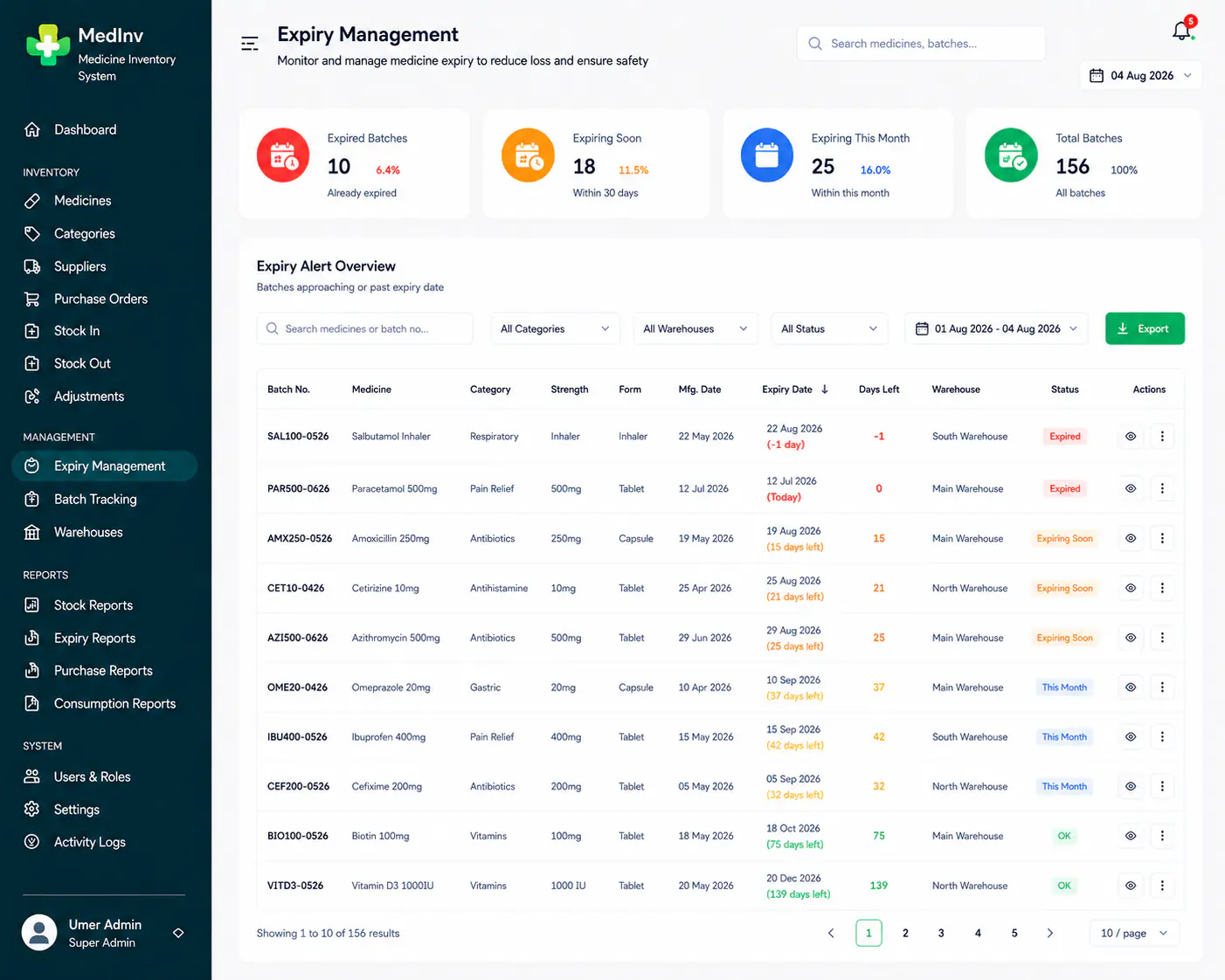
Monitor near expiry and expired stock so pharmacy teams can act before losses grow.
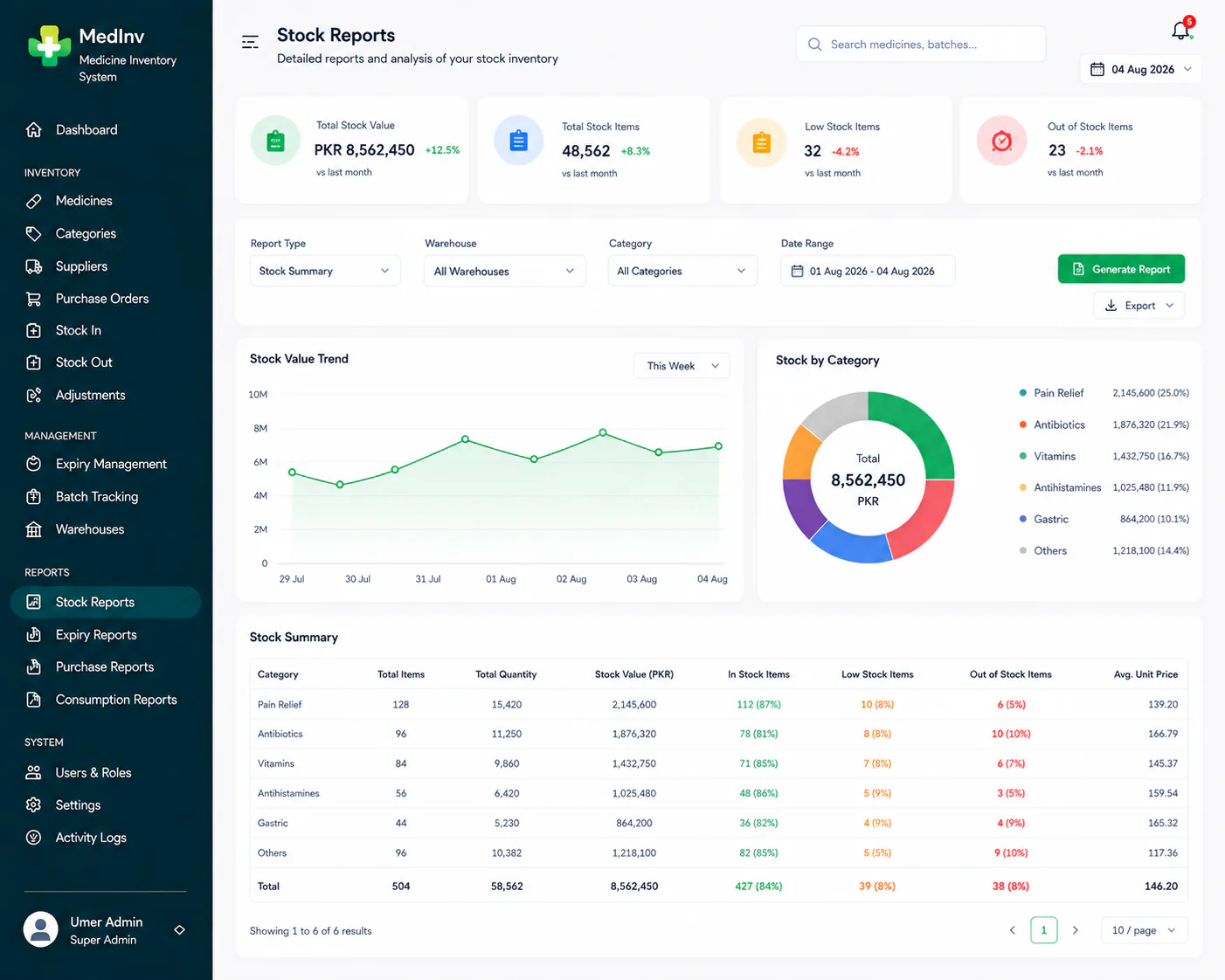
Review stock on hand, movement history, low stock, and inventory valuation reports.
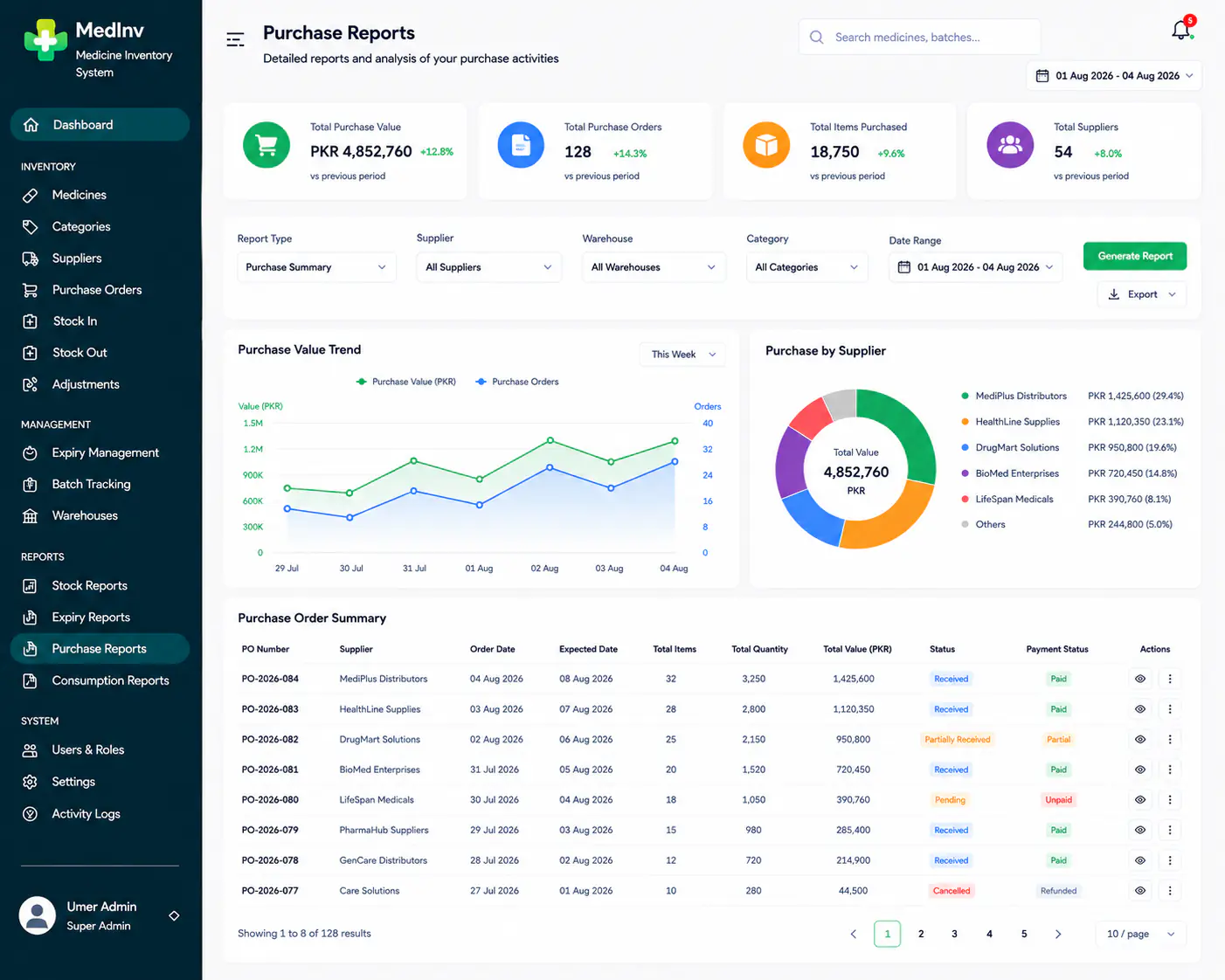
Analyze purchase orders, supplier spend, and receiving performance over time.
Testimonial
We finally manage medicines as batches with dates, not just counts. Purchasing and expiry conversations are calmer because the system shows the same truth.
Case study FAQs
Questions about this engagement: how we scoped, sequenced, and measured outcomes for MediStock Pharmacy Chain.
For MediStock we prioritized high risk and high velocity items first, then expanded coverage with the pharmacy team.
Yes. Movements keep batch identity so receiving MediStock branches inherit expiry truth.
Adjustment workflows with reasons keep valuation and audit history intact for each batch.
Module details live on the Medicine Inventory System project page. This case study covers the MediStock engagement.
Pharmacists and purchasing leads designed medicine fields and expiry aware alerts so floor actions stayed practical.
Ten weeks: batch and expiry catalog model first, then stock movements, purchasing, valuation reports, and branch expansion of coverage.
Suppliers and purchase orders connect to on hand truth in system. Deeper supplier portal APIs can follow once stock in discipline is solid.
We trained exception handling for damaged or returned stock and daily expiry alert workflows, not only count entry.
Yes. Batch and expiry discipline matters at any size; multi branch transfer complexity can grow as locations are added.
MediStock tracked near expiry visibility lead time, PO alignment with consumption, valuation cleanup effort, and write off conversations backed by batch data.
On hand stock was loaded with batch and expiry where known. High risk items were verified first before broader shelf coverage expanded.
Post launch we refined alert thresholds, transfer workflows, and purchasing views from pharmacist and buyer feedback.
More work
Tell Next Software Development Company about your goals. We will reply within one business day.
Get a Free Quote